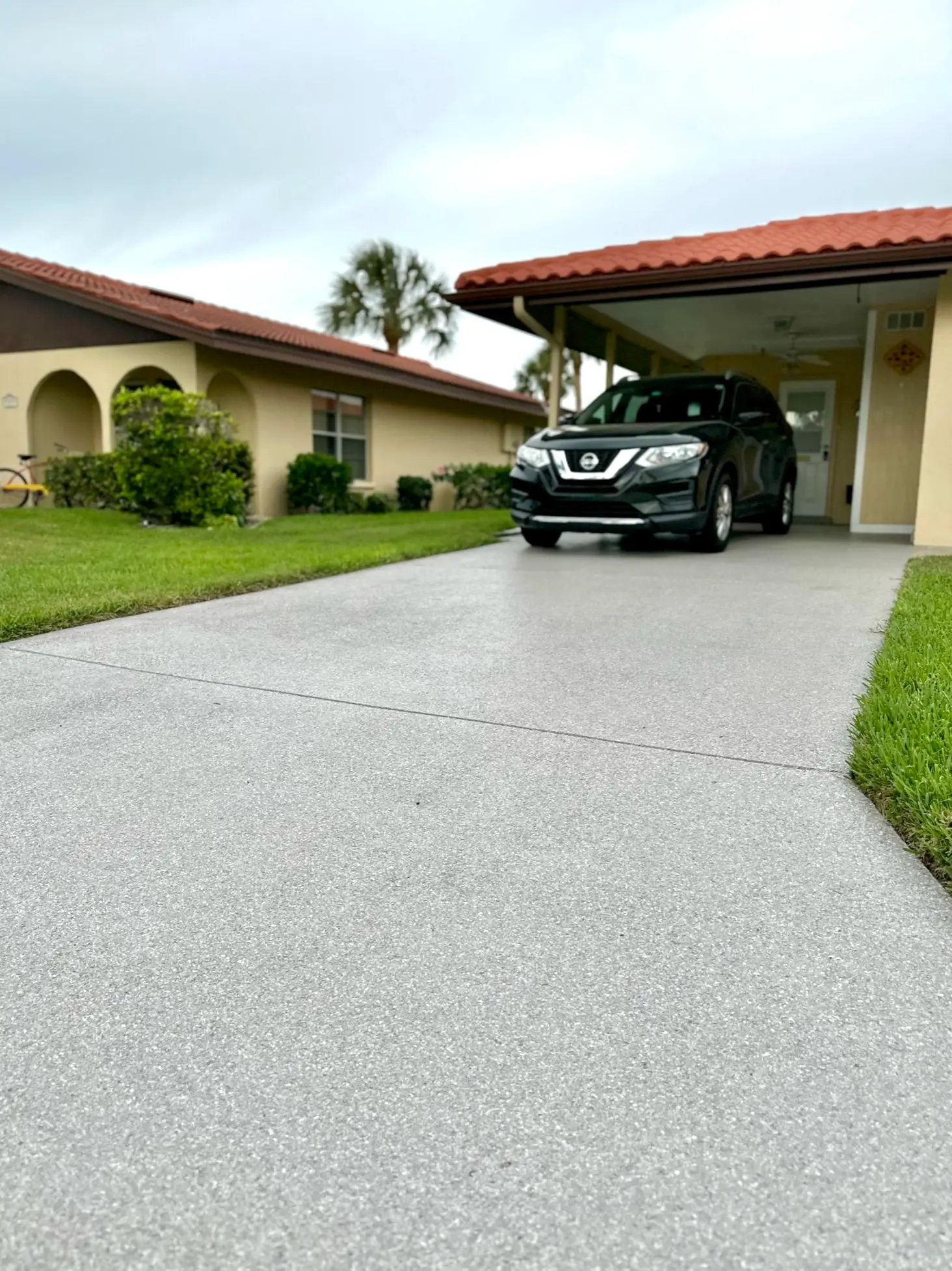
How much weight can a residential concrete driveway hold? A standard 4-inch-thick driveway can typically support passenger cars and light trucks, weighing roughly 6,000 to 8,000 pounds. However, every driveway is unique, so these numbers should be treated as general guidelines. Heavier vehicles, such as RVs, large trucks, or boats on trailers, often require thicker concrete or added reinforcement to prevent cracking and ensure long-term durability. Consulting a local expert like DecoCrete Services is the safest way to determine your driveway’s actual load capacity.
DecoCrete combines expert knowledge and local experience to help homeowners build driveways that last. In the sections below, we’ll break down the key factors, including slab thickness, concrete strength, subgrade preparation, and optional reinforcement, to help you understand how much weight your driveway can safely handle.
Three Critical Factors That Determine Driveway Strength
The ultimate load limit of your driveway is not just about the concrete itself, but the system that it’s part of. Three factors are paramount:
1. Thickness: The Foundation of Strength
While 4 inches is the minimum standard, it is often insufficient for driveways that regularly host heavier vehicles.
- 4 Inches: Suitable for standard passenger cars and small SUVs.
- 5–6 Inches: Recommended for RVs, heavy-duty trucks, boats on trailers, or occasional delivery vehicles. Increasing thickness improves the driveway’s load capacity and reduces the risk of cracking.
Small adjustments, like ensuring a uniform slab thickness and avoiding abrupt transitions, can significantly reduce stress points and help your driveway better handle heavy vehicles over time.
2. Concrete Strength (PSI)
The PSI rating indicates the concrete’s ability to withstand compressive force. Residential driveways typically use a 3,000 PSI concrete mix, providing sufficient durability for everyday vehicles. Upgrading to a 4,000 PSI mix increases its resistance to heavy loads, cracking, and harsh environmental conditions, such as Florida’s freeze-thaw cycles and high humidity.
Regularly sealing the concrete and avoiding sudden heavy loads during the first few weeks of curing can further enhance its strength and prevent premature surface damage.
3. Subgrade Preparation: The Unseen Hero
The most common cause of concrete driveway failure is not the concrete itself, but poor soil preparation (subgrade). Concrete relies on the subgrade to provide uniform support. If the subgrade is not properly compacted or if it contains organic material, it can settle unevenly, creating voids beneath the slab. When a heavy load passes over a void, the concrete can crack and fail, regardless of its thickness or PSI.
Proper subgrade preparation, including grading and compaction, is a non-negotiable step for a long-lasting driveway. Incorporating a layer of compacted gravel beneath the concrete can further stabilize the slab and improve load distribution, particularly in sandy or shifting soils.
Protecting Your Driveway
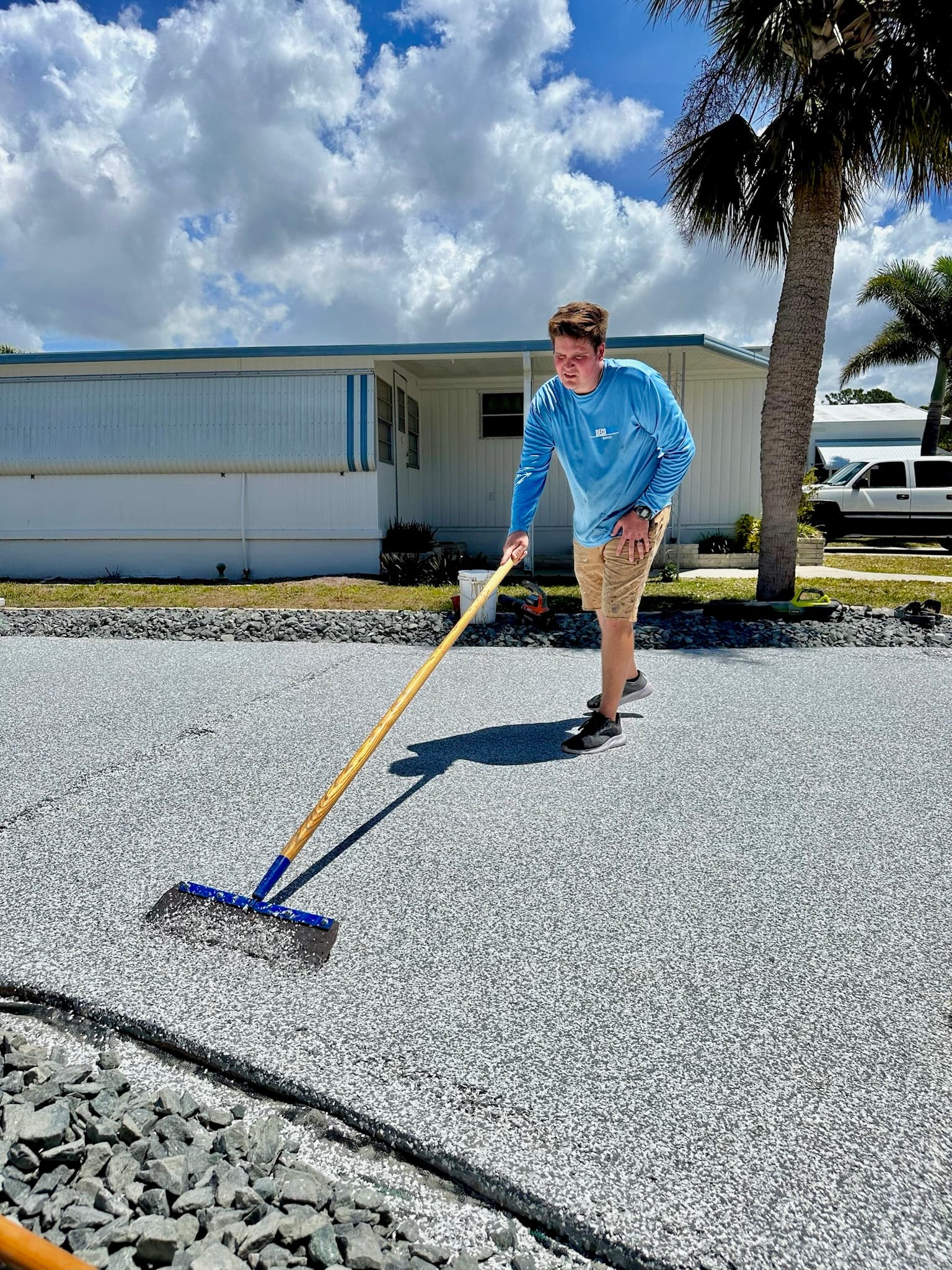
Concrete is strong but still vulnerable to surface wear, staining, and environmental damage. In Southwest Florida, exposure to UV rays and humidity can accelerate deterioration.
High-performance driveway coatings offer essential protection. Polyaspartic coatings, for example, are fast-curing, highly durable, and more resistant to UV damage than traditional epoxy coatings. They protect against:
- Staining: Oil, grease, and other automotive fluids are easily cleaned.
- Impact: Guards against chips and spalling.
- UV Damage: Prevents yellowing or fading under intense sunlight.
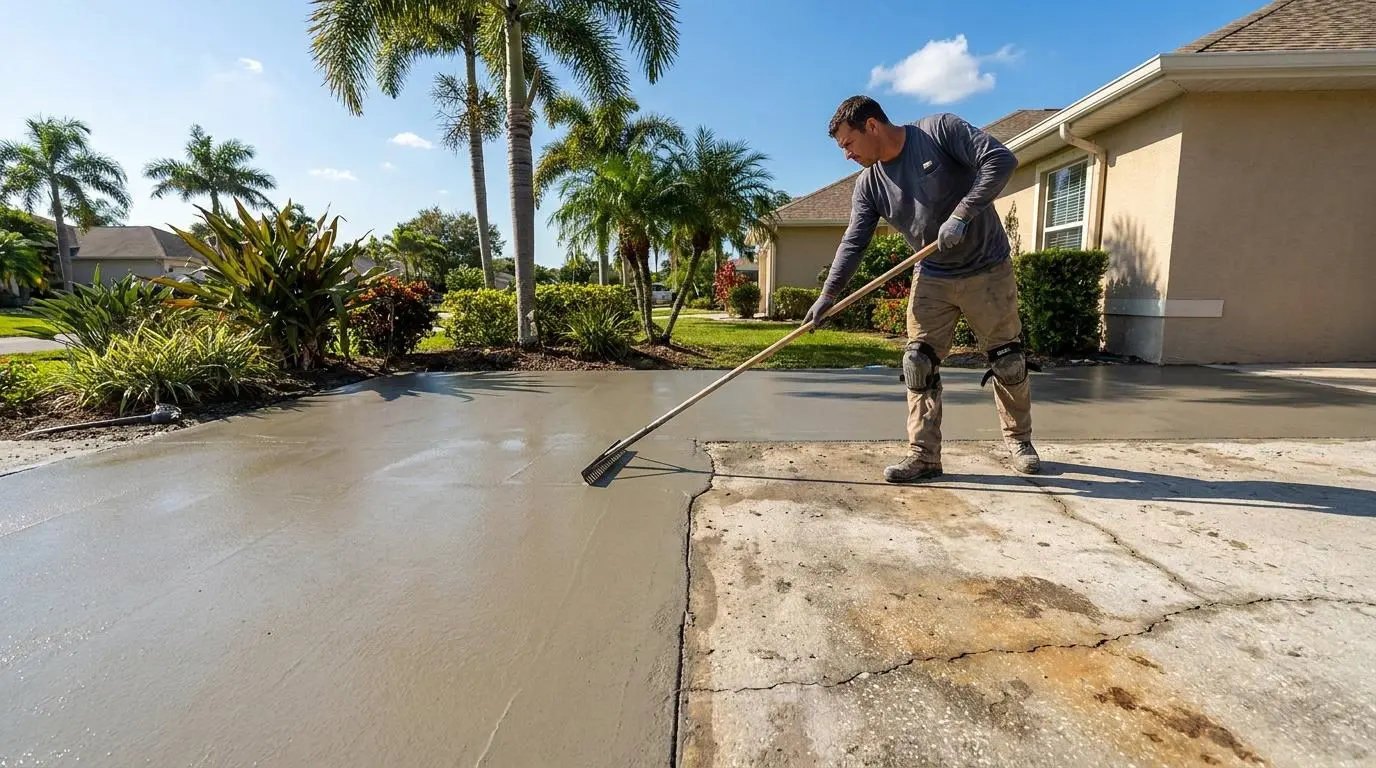
If your driveway is showing cracks or surface wear, concrete resurfacing and overlays can restore its integrity before a protective coating is applied.
Optional Reinforcement
Even a driveway with adequate thickness can benefit from internal reinforcement, such as steel rebar or welded wire mesh. These reinforcements help distribute heavy loads more evenly, reduce cracking from temperature changes, and provide added protection against soil movement. Many homeowners overlook this step, but it can extend a driveway’s lifespan by decades, especially in regions with sandy or shifting soils, such as Southwest Florida.
Ready for a Driveway That Lasts?
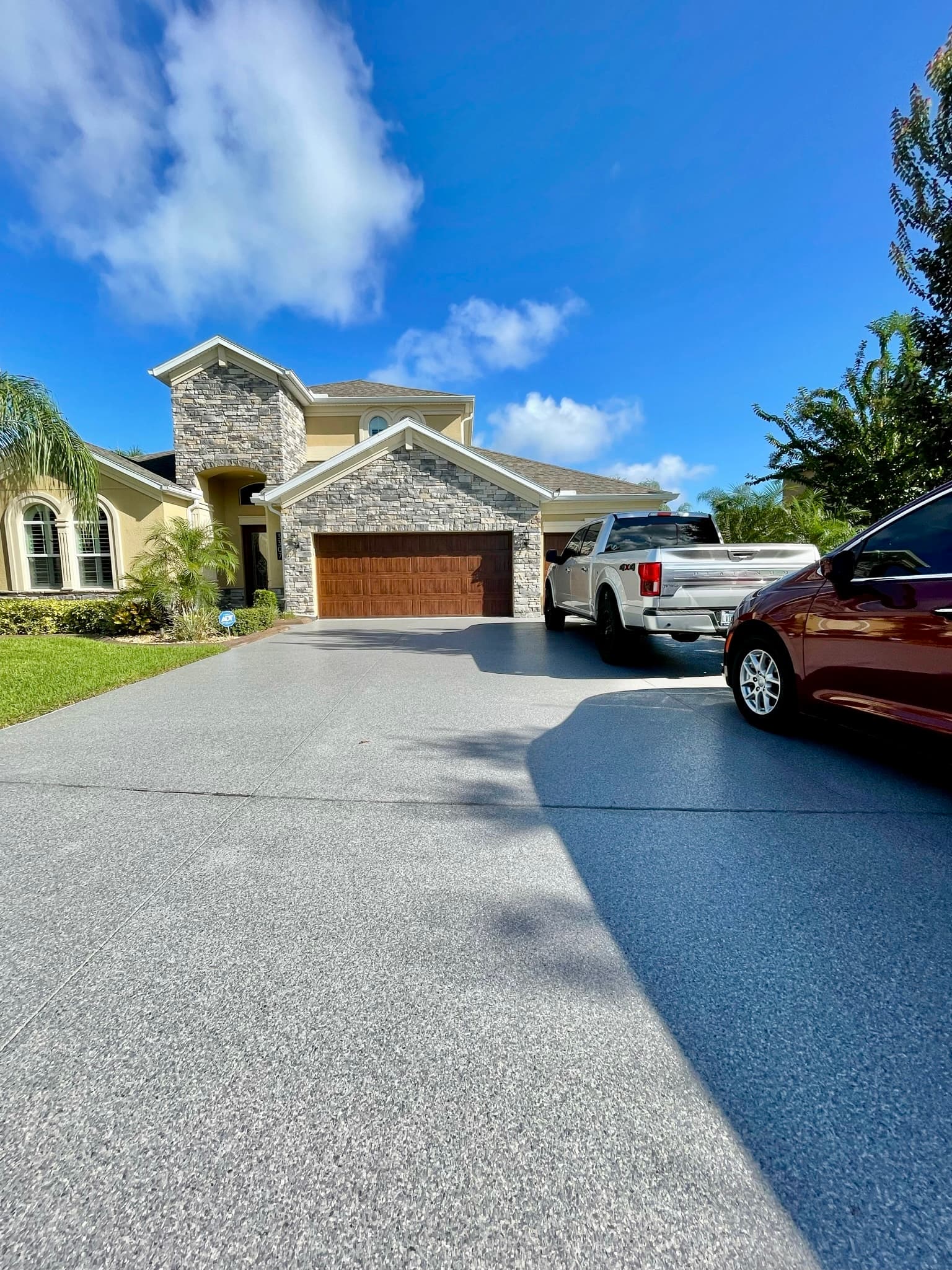
Understanding the load capacity of a residential concrete driveway is crucial for planning your property’s needs. Whether you’re installing a new driveway or looking to protect and restore an existing one, partnering with a local expert ensures the job is done right, from the subgrade up.
DecoCrete Services is committed to providing durable, beautiful concrete solutions across Sarasota, Manatee County, and the surrounding areas. We offer a variety of services, from our polyaspartic garage floor coating to complete driveway restoration.
Don’t wait until cracks and damage compromise your investment. Contact DecoCrete Services today for a free consultation and discover how we can strengthen, protect, or restore your concrete driveway to handle whatever life throws at it. Our expert team will assess your needs and recommend the best solutions to ensure your driveway performs beautifully for decades.

Devin Martin is the owner and lead specialist at DecoCrete Services, serving the Sarasota and Manatee County areas. With an eye for design and a focus on structural integrity, Devin specializes in transforming plain concrete into high-end, decorative assets. He is dedicated to providing Gulf Coast homeowners with durable, weather-resistant flooring solutions that blend aesthetic appeal with industrial-grade performance.