For any commercial property owner or facility manager in Southwest Florida, concrete slabs are more than just floors. They are the foundation of your operation. These surfaces must withstand constant foot traffic, heavy machinery, chemical spills, and the relentless pressure of daily business. Getting the thickness right is a matter of compliance and a critical investment in the longevity and safety of your commercial space.
So, how thick should commercial concrete be? The answer depends on the slab’s intended use, expected loads, and subgrade conditions. As a leading provider of commercial concrete coatings in Sarasota and Manatee counties, DecoCrete Services understands that a durable coating is only as good as the concrete beneath it. We guide our commercial clients through the necessary industry standards, helping ensure the robustness of their foundation before applying the final protective layer.
Thickness by Application: Industry Standards
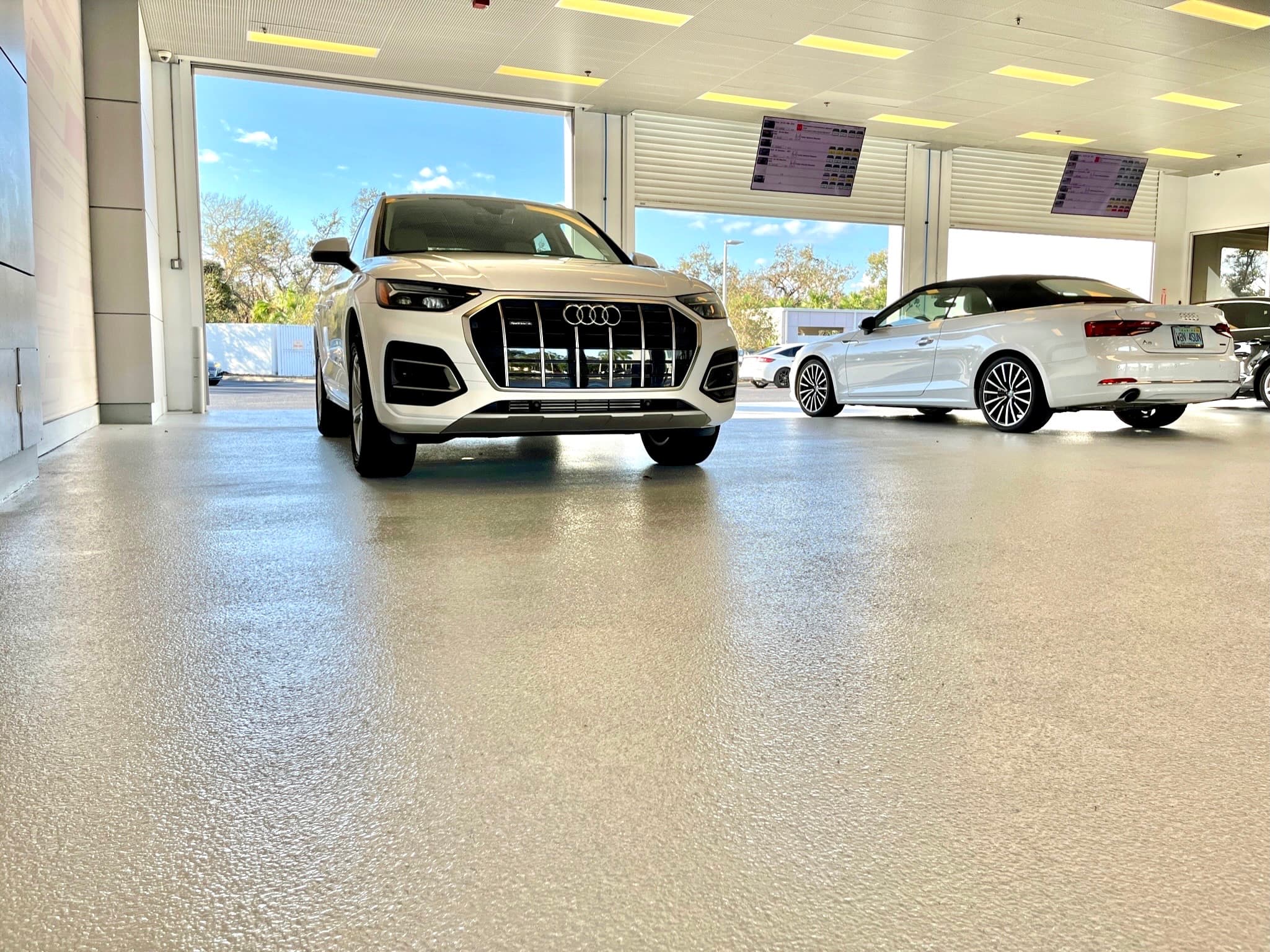
Commercial concrete slabs handle significantly heavier loads than residential slabs, requiring more thickness and higher compressive strength (psi). Here is a breakdown of the typical industry standards for various commercial applications:
Retail & Light Commercial (4 to 6 inches)
- Primary Load Type: Foot traffic, light shelving, small delivery carts
- Recommended PSI: 3,000–4,000 PSI
- Application: Small offices, retail storefronts, and restaurants where a 4-inch slab is often the minimum standard. Increasing to 6 inches provides a substantial durability boost and protection against cracking, especially for spaces receiving heavy deliveries or minor equipment
Parking Lots & Structures (6 to 8 inches)
- Primary Load Type: Vehicle traffic, repeated heavy loads, dynamic forces
- Recommended PSI: 4,000 PSI+
- Application: Parking facilities that must withstand constant vehicle movement, weight distribution, and environmental exposure
Warehouses & Manufacturing (6 to 8 inches)
- Primary Load Type: Forklifts, heavy racking, pallet jacks, constant movement
- Recommended PSI: 4,000–5,000 PSI
- Application: Standard warehouse floors requiring support for massive static loads from high-density storage racks and dynamic, concentrated loads from material handling equipment. Eight inches is often preferred to anticipate future changes in use and heavier equipment
Heavy Industrial & High-Load (8 to 12 inches+)
- Primary Load Type: Very heavy machinery, extreme point loads, specialized equipment
- Recommended PSI: 5,000–6,000 PSI+
- Application: Facilities dealing with extremely heavy machinery or specialized equipment, often requiring specialized reinforcement and control joints to handle extreme point loads and constant intensive use
Beyond Thickness: The Role of PSI and Proper Subgrade
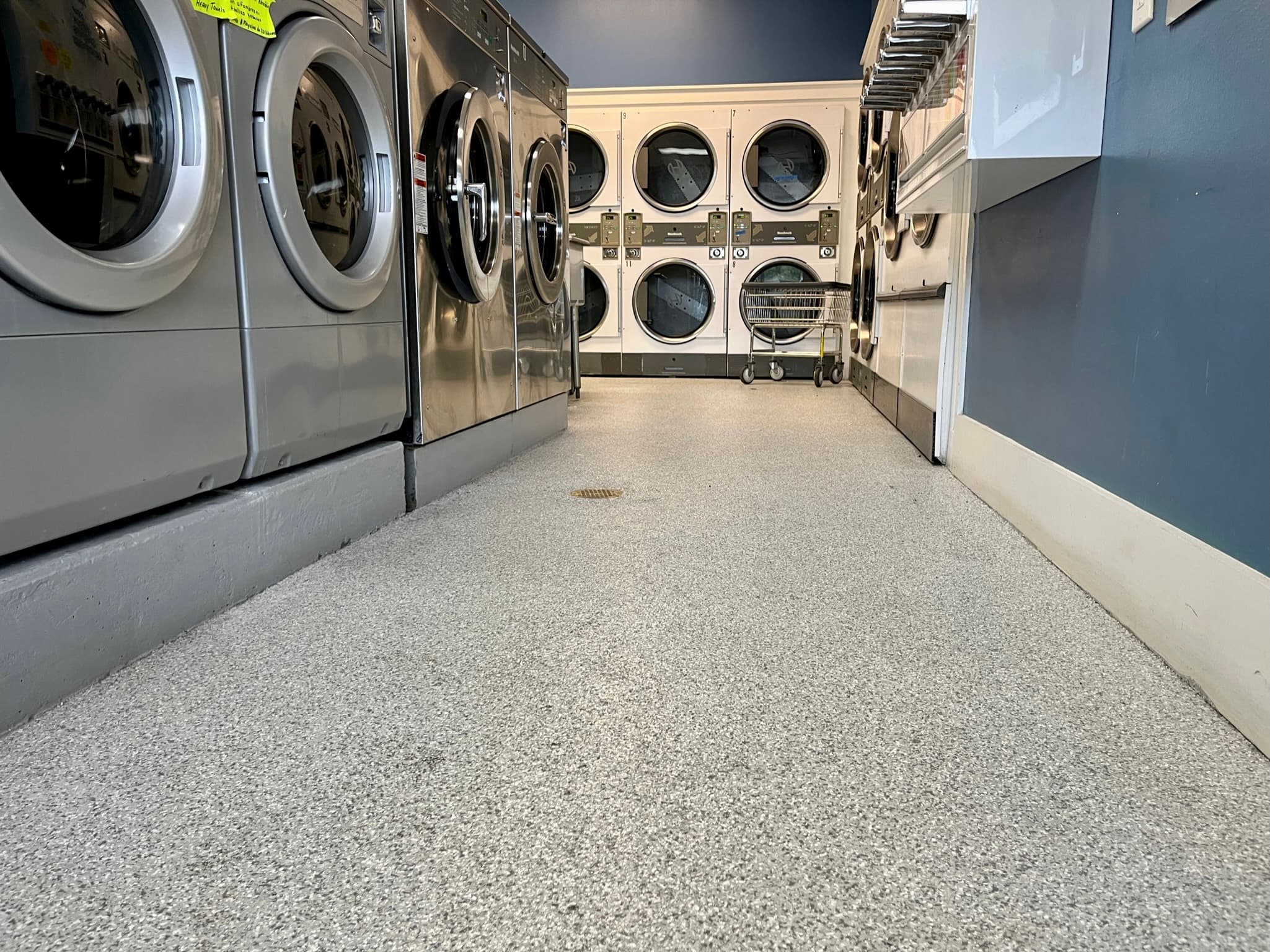
While thickness is the most visible factor, two other elements are equally vital to a commercial slab’s performance:
Compressive Strength (PSI)
Commercial concrete typically starts at a minimum of 4,000 PSI, significantly higher than the residential standard. Higher-PSI concrete is denser, more abrasion-resistant, and better able to withstand constant wear and tear. Extremely heavy industrial floors may use 5,000 to 6,000 PSI concrete for maximum durability.
Subgrade Preparation
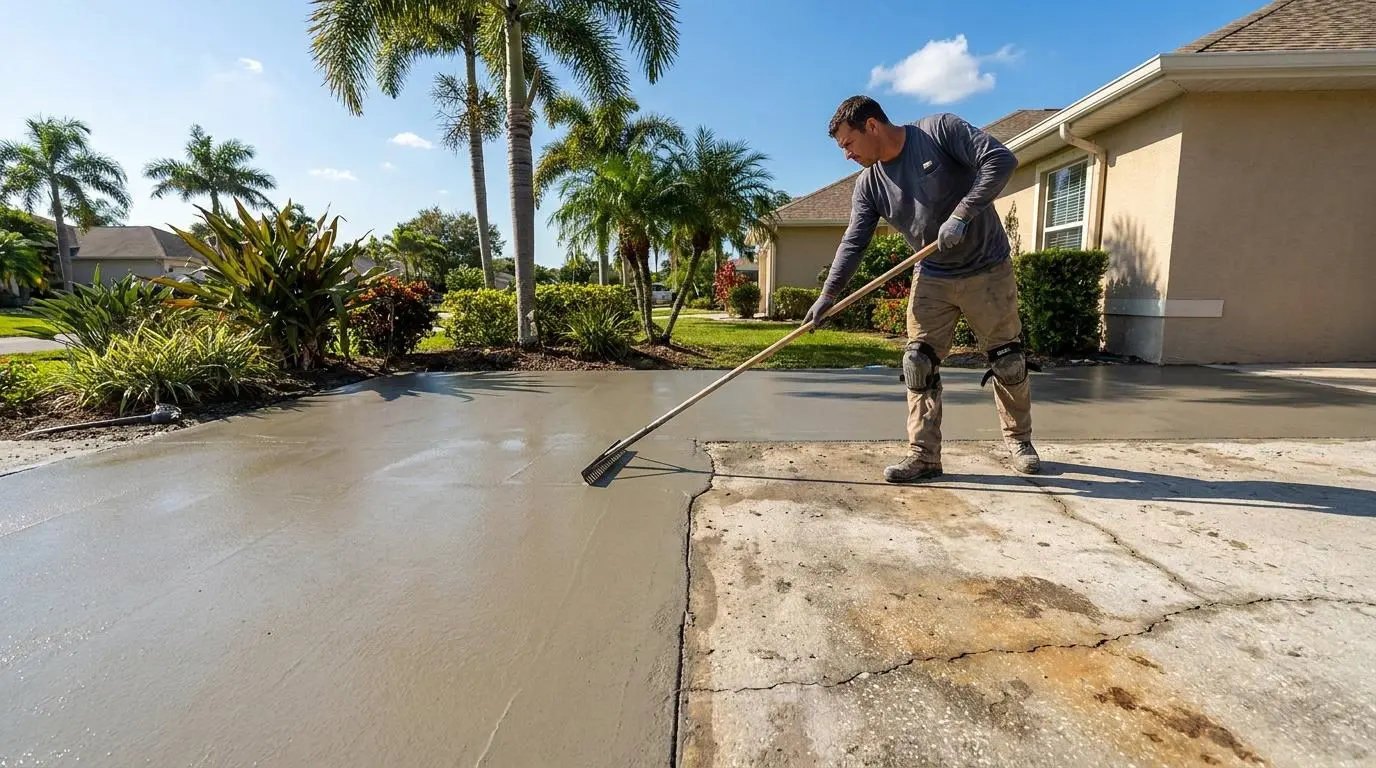
Similar to residential driveways, the subgrade or the soil beneath the slab is paramount. In commercial construction, it must be meticulously prepared, compacted, and often stabilized to ensure uniform support. Any weakness in the subgrade can lead to slab settlement, cracking, and eventual failure under heavy load. Proper grading, compaction, and, in some cases, gravel layers are essential for long-term performance.
Protecting Your Commercial Concrete Investment
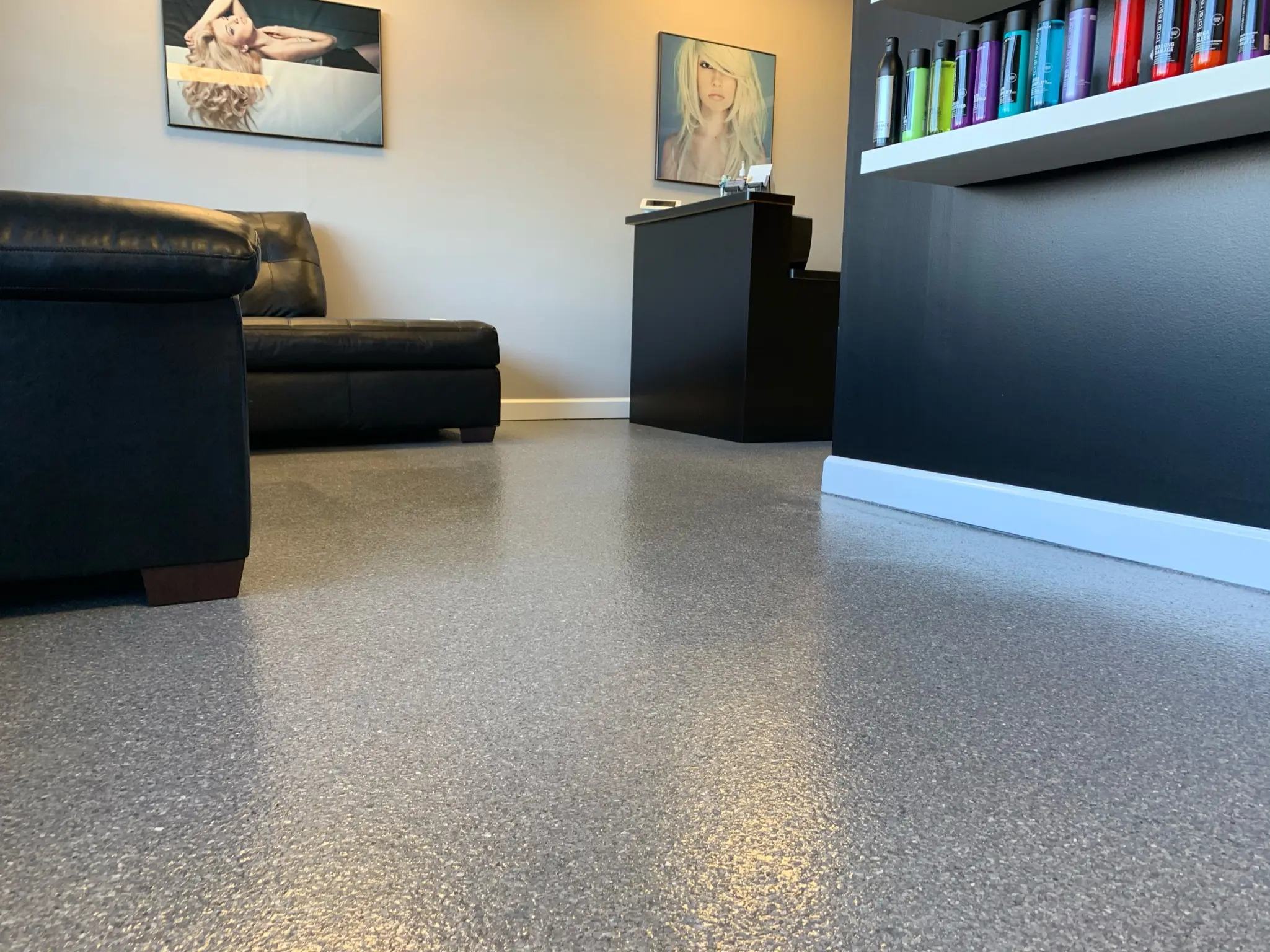
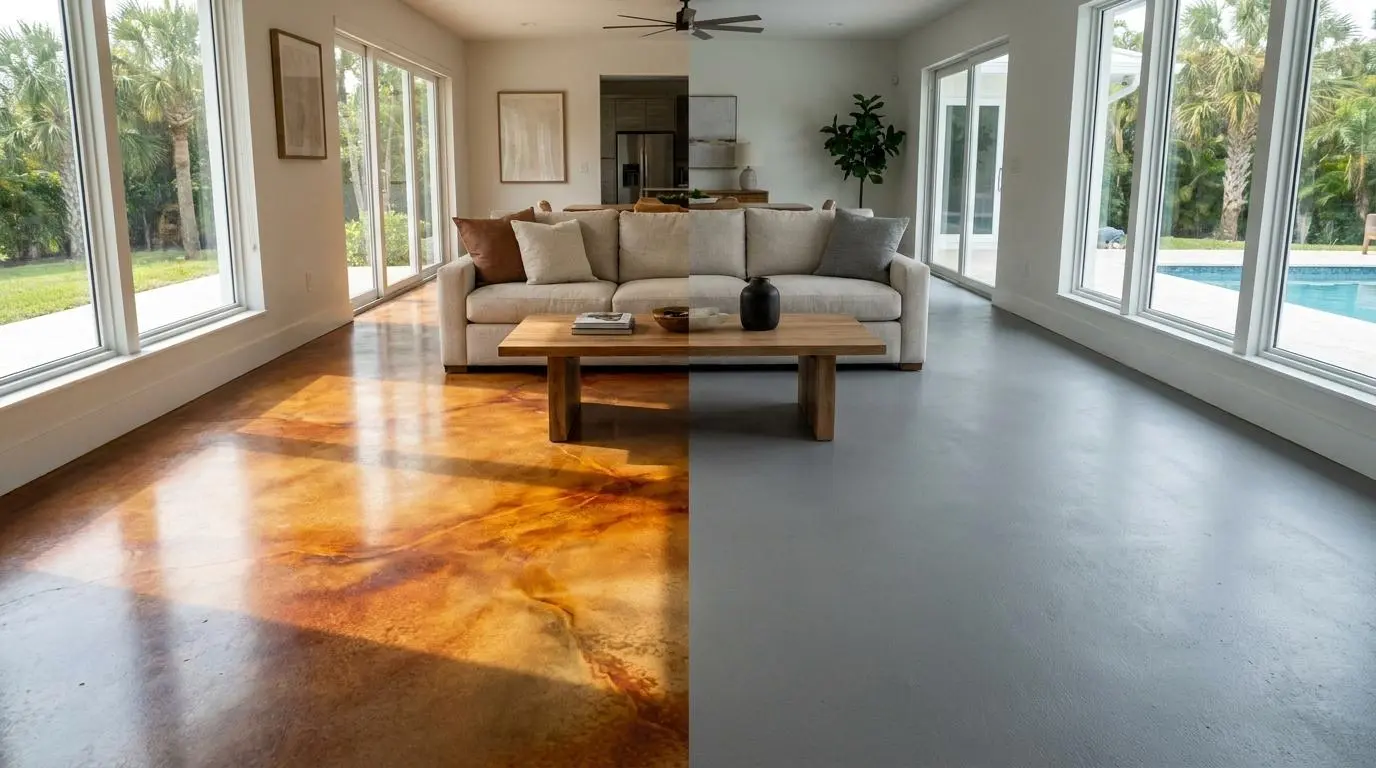
Once the correct thickness and strength are established, the next step is protecting that investment with a high-performance coating. DecoCrete Services specializes in a range of commercial concrete coating solutions designed to enhance durability, safety, and aesthetics.
For high-traffic interior spaces, our epoxy flooring systems provide a seamless, non-porous surface that is:
- Chemical Resistant: Essential for workshops, manufacturing, and food service areas where spills are common
- Impact Resistant: Protects the concrete from chips and damage caused by dropped tools or heavy items
- Aesthetically Versatile: Available in a variety of colors and blends, creating a professional, clean look aligned with your brand
For areas that require a modern, low-maintenance, and highly durable finish, concrete polishing is an excellent commercial option. Polished concrete is resilient, requires minimal upkeep, and is often chosen for retail spaces, showrooms, and open-plan offices for its elegant, timeless look.
Note: Coatings and polishing improve surface durability, aesthetics, and maintenance, but do not increase the slab’s structural load capacity.
Ready To Build or Protect Your Commercial Floors?
Understanding how thick commercial concrete should be is the first step toward a successful project. Whether pouring a new slab or protecting an existing one, partnering with a local expert familiar with the Southwest Florida environment is essential.
DecoCrete Services proudly serves the commercial sector in Sarasota County, Manatee County, and surrounding areas, providing tailored, durable flooring solutions that meet industry standards. Reach out to us today for commercial flooring advice and a free quote.

Devin Martin is the owner and lead specialist at DecoCrete Services, serving the Sarasota and Manatee County areas. With an eye for design and a focus on structural integrity, Devin specializes in transforming plain concrete into high-end, decorative assets. He is dedicated to providing Gulf Coast homeowners with durable, weather-resistant flooring solutions that blend aesthetic appeal with industrial-grade performance.