How often to seal a concrete driveway in Florida depends on the sealer type. Acrylic sealers need recoating every one to three years, while penetrating silane-siloxane sealers last five to ten. Year-round UV and rain shorten every sealer’s rated life in Southwest Florida. DecoCrete Services installs protective driveway coatings across Sarasota and Manatee counties that hold up under those conditions.
You rinse the driveway after a storm and water soaks into the concrete instead of beading. The sealer is already gone. Each sealer type fails on a different schedule in Florida, and the cost of waiting past that window runs higher than most homeowners expect.
Resealing Frequency by Sealer Type
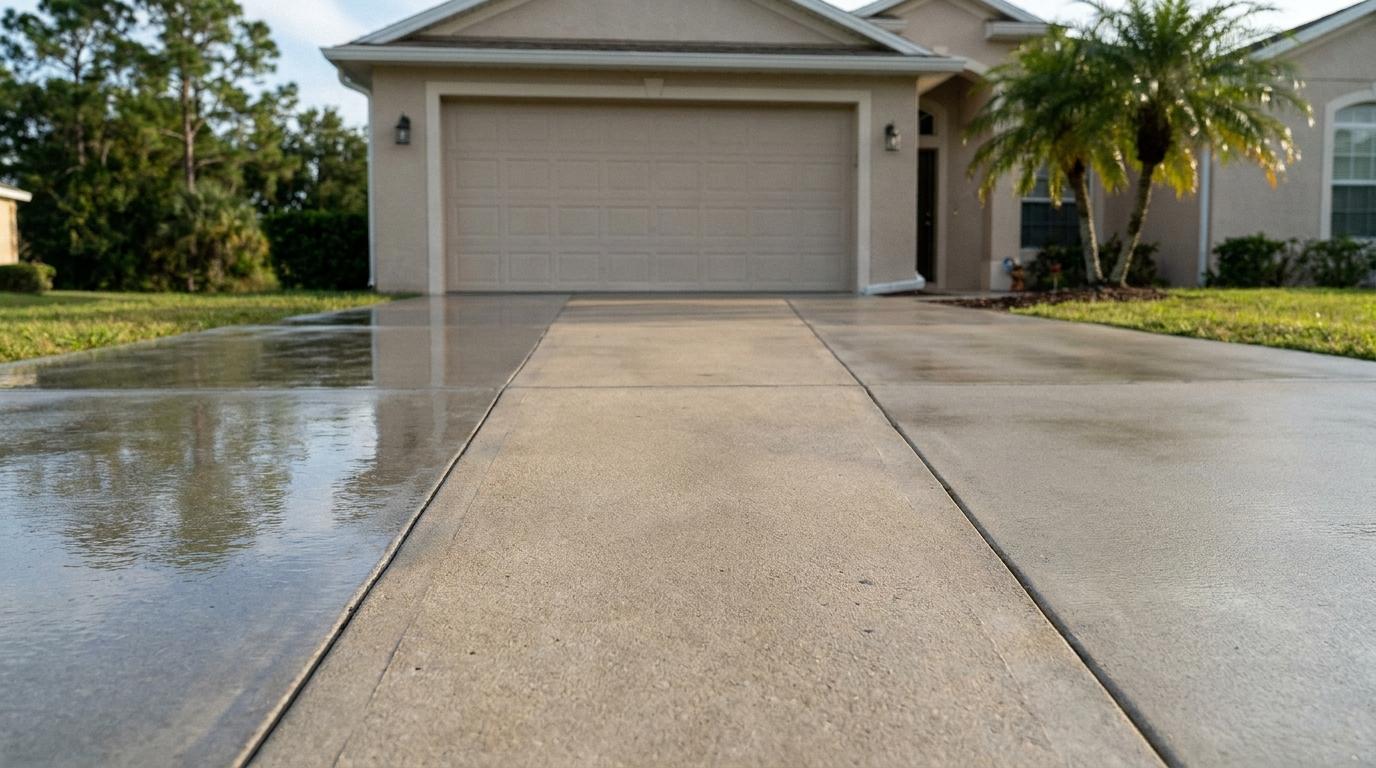
The resealing timeline for a concrete driveway depends almost entirely on the sealer chemistry on or inside the surface.
Penetrating Sealers (Silane/Siloxane)
Penetrating sealers absorb into the concrete pore structure rather than forming a film on top. There’s no surface layer for tires or rain to wear away. The ideal penetrating sealer for a Florida driveway typically lasts five to ten years before the slab starts absorbing water again. It also handles salt air well in coastal areas like Siesta Key.
Acrylic Sealers
Acrylic sealers form a thin film that adds a glossy or wet look. That film sits directly in Florida’s UV and rain, which degrades it faster than in northern climates. Most acrylic sealers need recoating every one to three years in Southwest Florida. In Bradenton’s coastal conditions, salt air compounds the UV damage and pushes acrylic toward the 12-month end of that range. White hazing or flaking means moisture is trapped under the failing film, and the fix is a full strip-and-reseal.
Polyurethane Sealers
Polyurethane creates a harder, thicker film than acrylic and resists tire abrasion better. It typically lasts five to seven years in Florida’s outdoor conditions. The per-square-foot cost runs higher, but the longer recoating interval often offsets the upfront difference.
Signs Your Driveway Needs Resealing
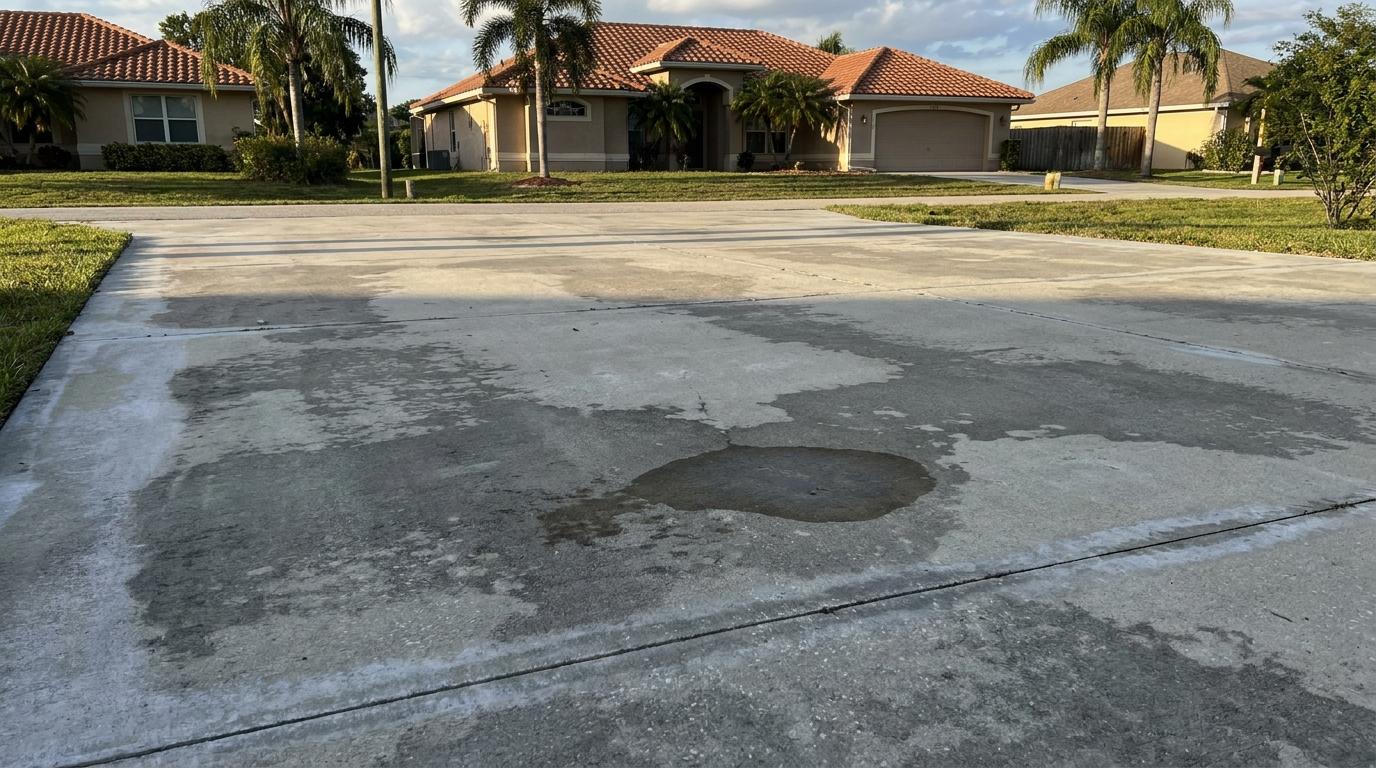
You don’t need to count years if you know what the surface is telling you.
- Water stops beading. A sealed driveway repels water into droplets. When water spreads flat and darkens the concrete, the sealer has worn through.
- Color turns dull or chalky. UV breaks down the sealer’s top layer first. A shift from glossy to flat gray is the earliest visible warning.
- Stains soak in faster. Oil, rust, and leaf tannins that used to wipe clean now leave permanent marks.
- White haze or flaking appears. Moisture trapped under a failing acrylic sealer causes this. The old sealer needs full removal before a new coat goes on.
Why Florida Driveways Need More Frequent Sealing
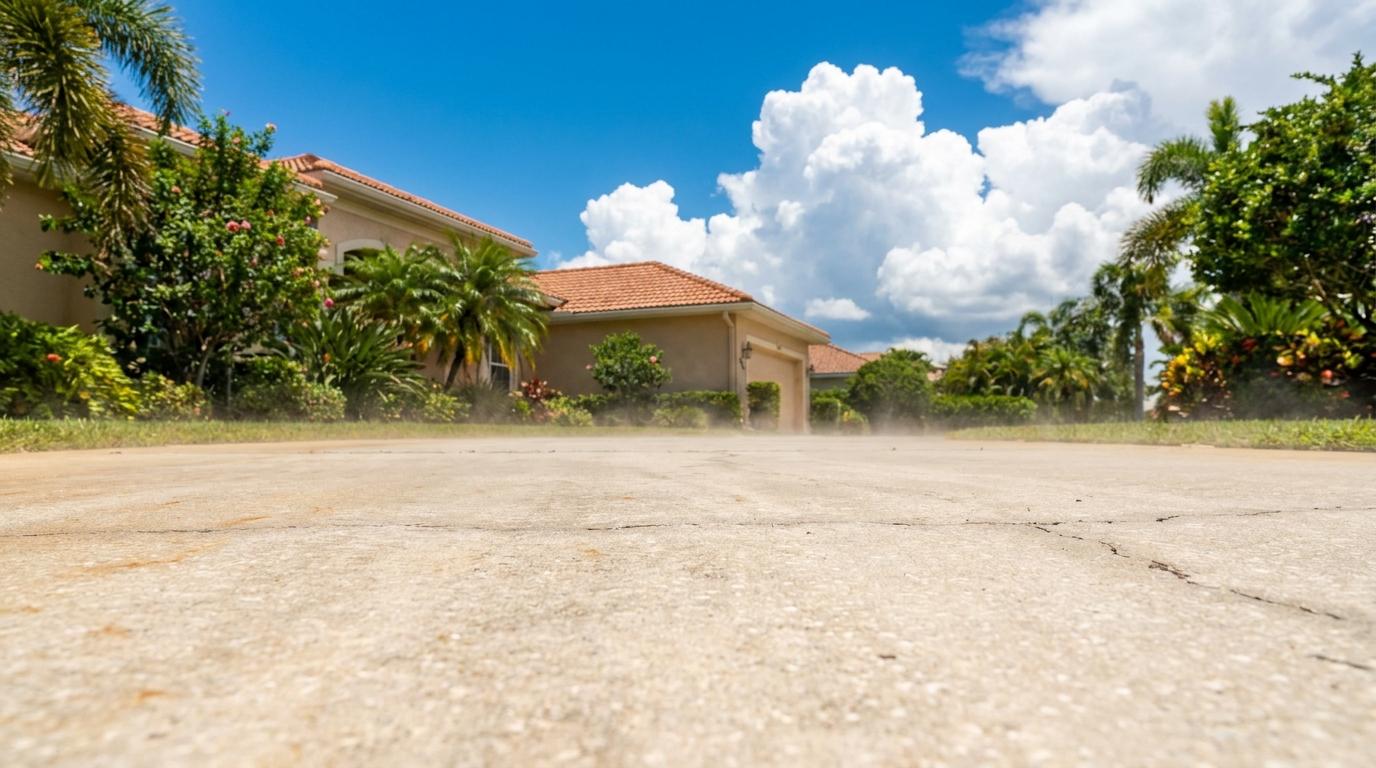
National sealer timelines assume moderate UV, seasonal rain, and cool winters. Southwest Florida breaks every one of those assumptions.
Sarasota averages over 50 inches of rain per year, most of it in intense summer storms that soak the slab and evaporate within hours. That rapid wet-dry cycling stresses sealers from both directions. UV compounds the problem. The UV index regularly hits 11 or higher from May through July. Acrylic sealers rated for three years in the Midwest often start chalking after 12 to 18 months here. When degradation passes surface wear, the conversation shifts to driveway resurfacing costs in Sarasota, which start at $3 to $7 per square foot.
Coastal properties on Siesta Key and Longboat Key face salt air on top of the UV and rain. Salt accelerates surface breakdown on any topical sealer. For Gulf-facing driveways, a penetrating sealer is baseline protection, not a premium upgrade.
Frequently Asked Questions
How much does it cost to seal a concrete driveway in Florida?
Professional concrete driveway sealing in Florida typically costs $1.50 to $3.00 per square foot, depending on sealer type and surface condition. For a standard two-car driveway of about 500 square feet, that works out to $750 to $1,500 per application. Scheduling before June avoids the rush pricing that many contractors add during peak storm season.
Can you seal a concrete driveway yourself?
You can seal a concrete driveway yourself if the slab is clean, dry, and free of existing coating failure. DIY application requires thorough pressure washing, at least 24 hours of drying time, and even roller or sprayer coverage across the full surface. Uneven application or sealing over trapped moisture causes white hazing and premature peeling, which is the most common reason homeowners hire a professional after one failed attempt.
Does sealing prevent cracks in a concrete driveway?
Sealing a concrete driveway does not prevent structural cracks caused by soil movement, tree roots, or heavy vehicle loads. Sealers protect the surface from water absorption, UV fading, and chemical staining, which slows the spalling and scaling that makes small cracks worse over time. If cracks wider than a quarter inch are already present, a professional assessment should address those before any sealer goes on.
Lock In Your Driveway’s Protection Before Storm Season
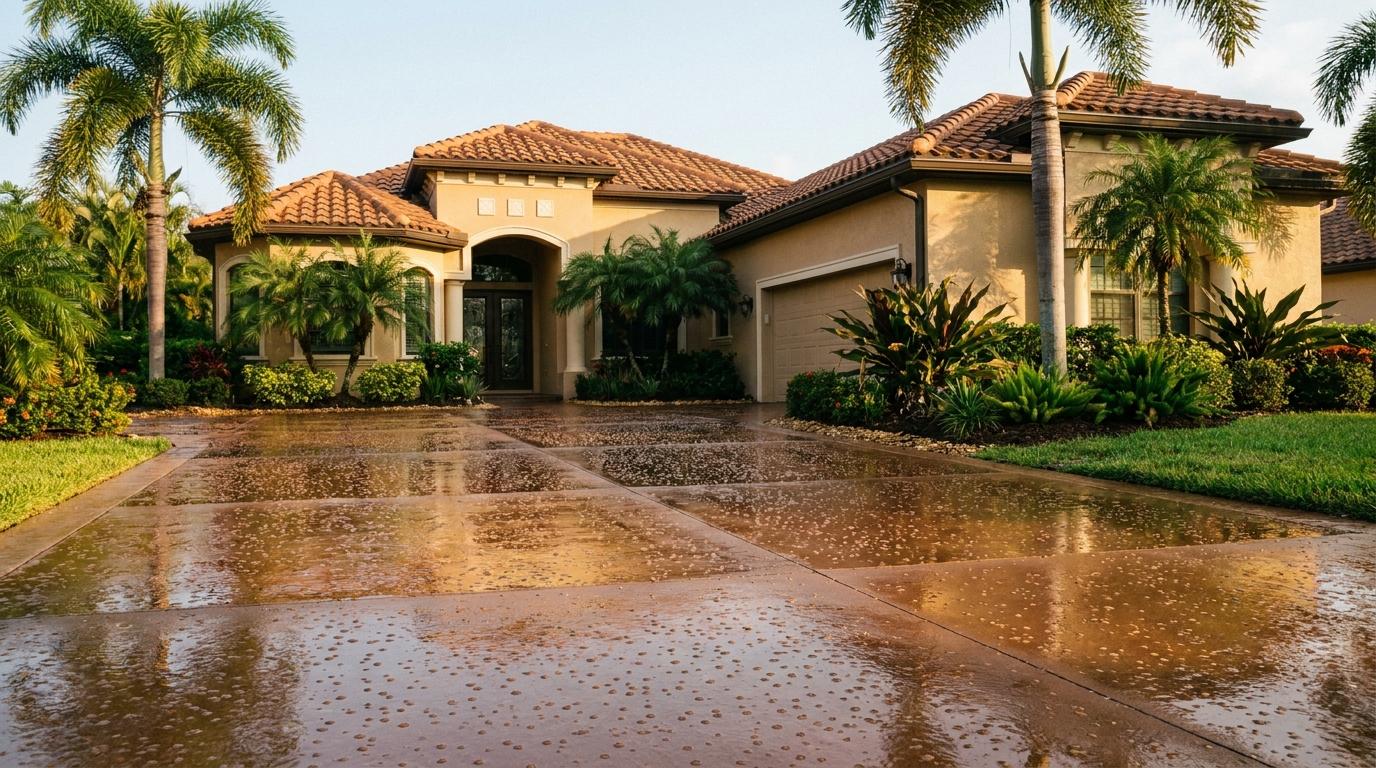
The sealer type you choose determines whether you’re recoating every year or every decade. Penetrating sealers offer the longest protection in Florida, while acrylics trade durability for a glossy finish that needs more frequent maintenance. DecoCrete Services matches each Sarasota and Manatee County driveway to the sealer that fits its sun, rain, and salt exposure. Staying ahead of the resealing schedule costs far less than repairing the damage that follows a failed sealer.
Contact DecoCrete Services at (941) 400-1755 to schedule an on-site driveway sealing assessment.

Devin Martin is the owner and lead specialist at DecoCrete Services, serving the Sarasota and Manatee County areas. With an eye for design and a focus on structural integrity, Devin specializes in transforming plain concrete into high-end, decorative assets. He is dedicated to providing Gulf Coast homeowners with durable, weather-resistant flooring solutions that blend aesthetic appeal with industrial-grade performance.