
Concrete stain vs paint comes down to how each product bonds with the surface. Stain penetrates into the concrete and becomes part of the slab, while paint sits on top as a film that chips and peels. DecoCrete Services applies concrete stains across Sarasota and Manatee counties, using acid and water-based formulas that hold their color for five to ten years.
Most homeowners pick paint because it costs less per square foot. Over any timeline past two years, stain is the cheaper option. From adhesion method to long-term maintenance, every comparison below favors one finish clearly.
How Concrete Stain and Concrete Paint Actually Work
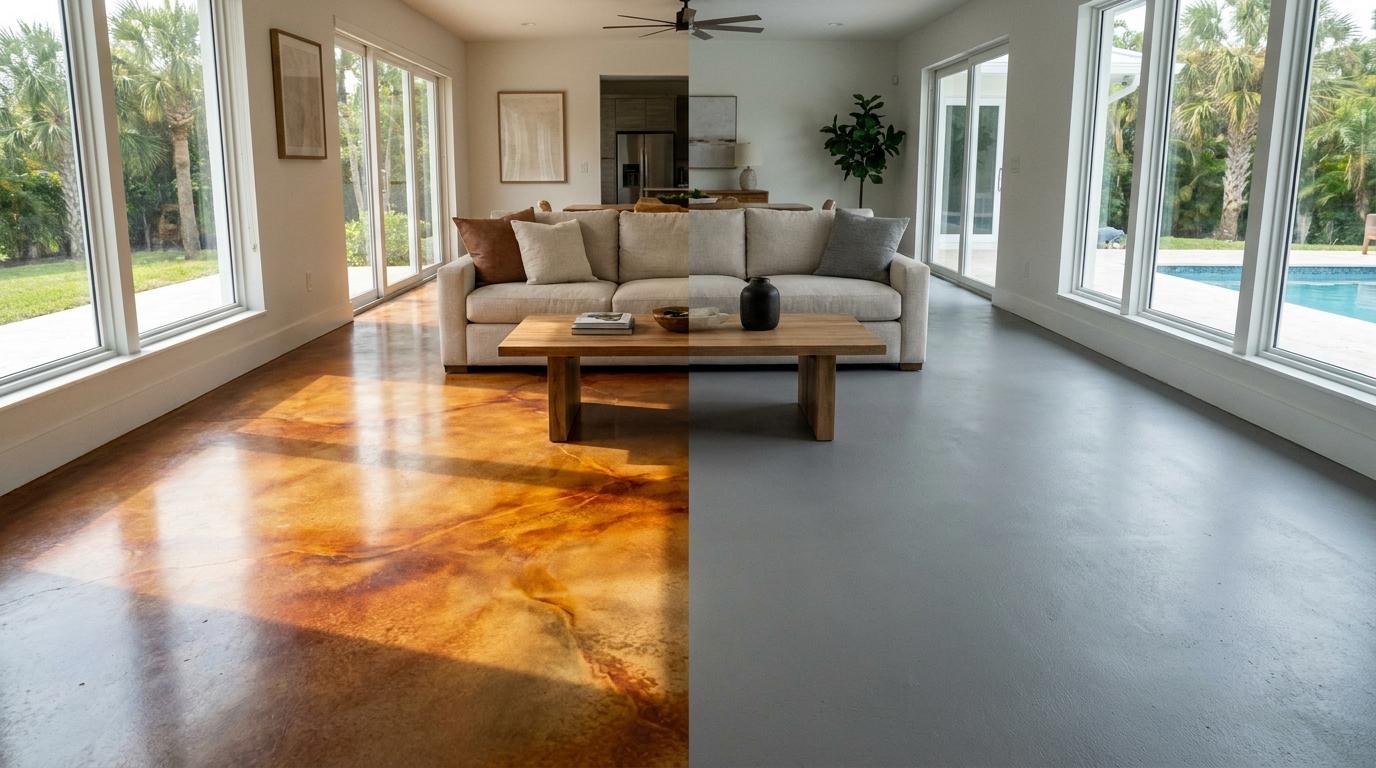
The performance gap between stain and paint starts with how each product interacts with the concrete surface.
Concrete Stain
Concrete stain uses acid or water-based pigments that soak into the pore structure of the slab. The color becomes part of the concrete, which is why stained surfaces don’t peel, chip, or flake. A topical sealer applied over the stain protects color from UV and wear. That sealer needs recoating every two to three years, but the stain itself stays embedded in the concrete underneath.
Concrete Paint
Concrete paint sits on top of the surface as a film. It covers imperfections well and costs less per square foot, but the film is vulnerable to foot traffic, moisture vapor from inside the slab, and UV exposure. Paint typically begins chipping or peeling within one to three years on Florida garage floors and outdoor slabs where heat and moisture cycling are constant.
Cost Comparison: Stain vs Paint Per Square Foot
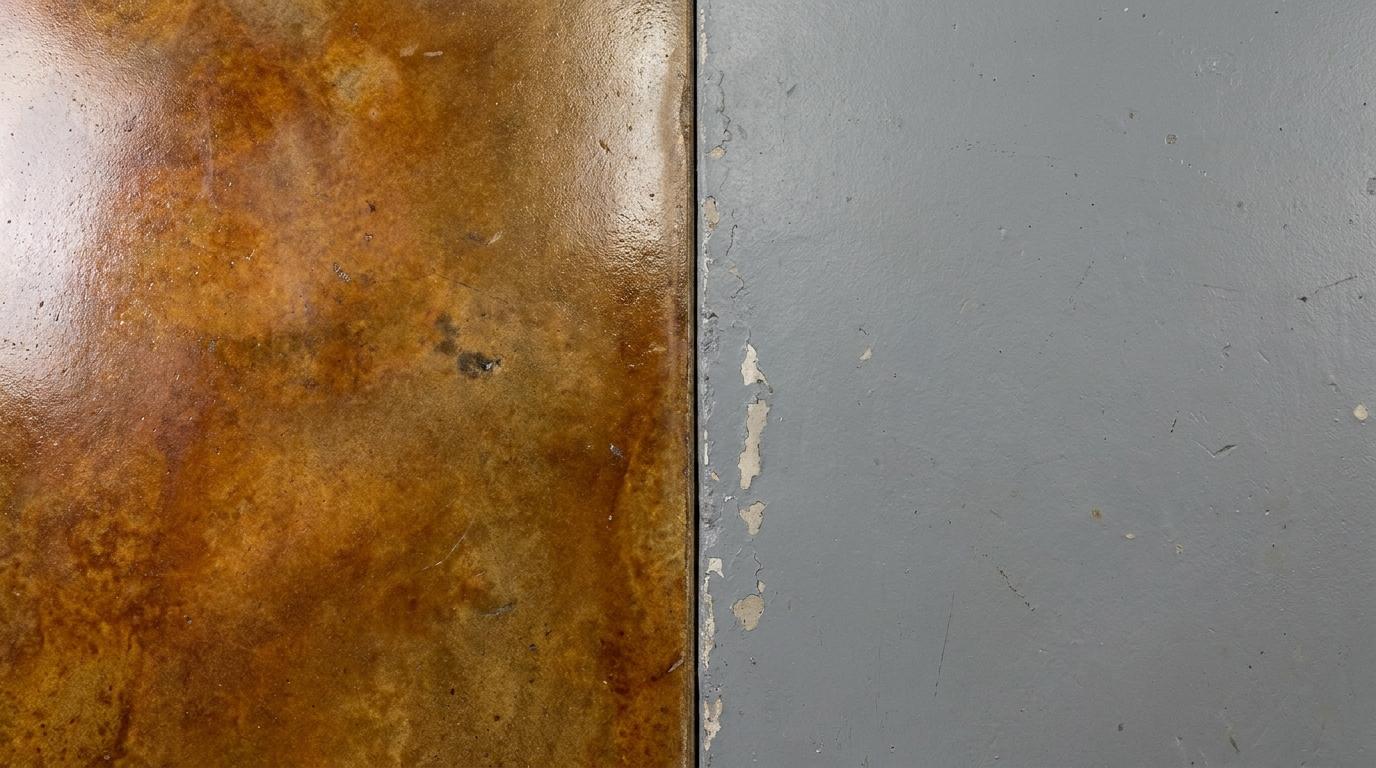
Paint looks cheaper on the initial estimate, but the math changes once you factor in how often each finish needs to be redone.
- Concrete stain: $2 to $6 per square foot installed, with resealing at $1 to $2 per square foot every two to three years. Over ten years on a 400-square-foot floor, total cost runs roughly $2,000 to $4,000.
- Concrete paint: $2 to $4 per square foot installed, but requires full recoating every one to three years. Over ten years, the total cost reaches $4,000 or more once you include prep and stripping.
Stain needs only cleaning and periodic resealing. Paint requires stripping the old coat, repairing chips, and full recoating each cycle. The prep labor alone adds $1 to $3 per square foot per cycle, which is why the long-term cost of staining concrete consistently beats paint even though the first application runs higher.
How Florida’s Climate Affects Your Decision
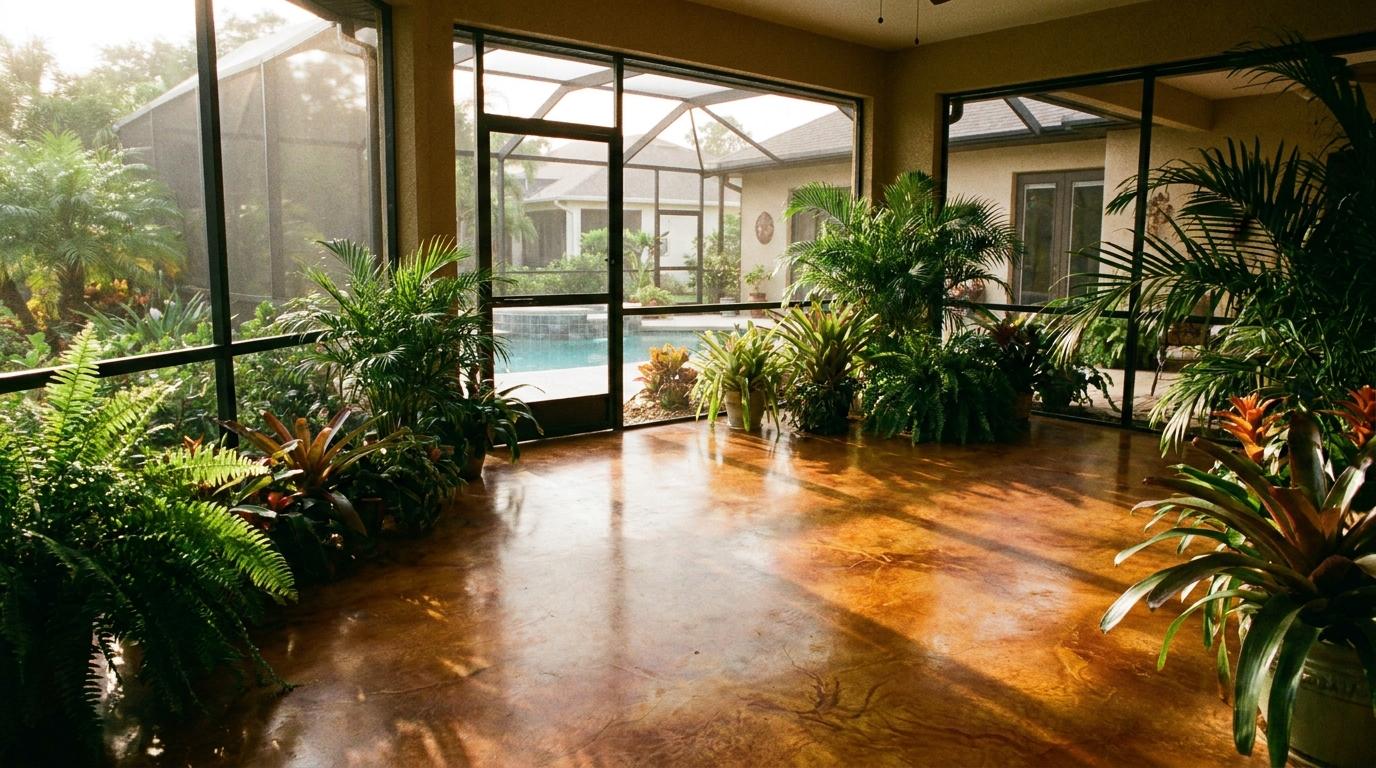
Florida’s heat, humidity, and UV exposure hit both finishes, but paint takes the worst of it.
Moisture vapor constantly moves upward through concrete slabs in Southwest Florida. Paint traps that moisture under its film, which causes bubbling and peeling on garage floors and lanai slabs. Stain doesn’t create a vapor barrier because it absorbs into the concrete, so moisture passes through without disrupting the finish.
UV is the other factor. Paint fades and chalks under direct sun within one to two years on exposed patios and driveways. Stain fades more slowly because the pigment sits inside the concrete, protected from direct UV contact. The sealer on top takes the UV hit. Cleaning the surface properly before staining ensures the pigment penetrates deeply enough to resist even Southwest Florida’s year-round exposure.
Frequently Asked Questions
How long does concrete stain last compared to paint?
Concrete stain lasts five to ten years with periodic resealing, while concrete paint typically shows visible chipping within one to three years. Stain penetrates the concrete pore structure and can’t peel because it’s embedded in the slab, not sitting on the surface. Paint forms a film that degrades under UV, moisture, and foot traffic. DecoCrete Services recommends resealing stained floors every two to three years to protect the color.
Can you stain concrete that was previously painted?
You can stain concrete that was previously painted, but only after the paint is completely removed. Paint creates a barrier that prevents stain from reaching the pore structure, and any residue left behind causes uneven color absorption. Diamond grinding or chemical stripping removes the film and opens the concrete for penetration. Staining over paint residue produces blotchy, inconsistent results that can’t be corrected after the fact.
Is polished concrete a better option than staining or painting?
Polished concrete eliminates the need for stain or paint entirely by grinding the slab to a glossy, stain-resistant sheen. DecoCrete Services installs polished concrete floors in Lakewood Ranch and across Sarasota County for homeowners who want the lowest ongoing maintenance. The tradeoff is a limited color palette, since polished concrete relies on the natural gray or integral dyes rather than the full range available with acid and water-based stains.
When Staining Is the Better Investment
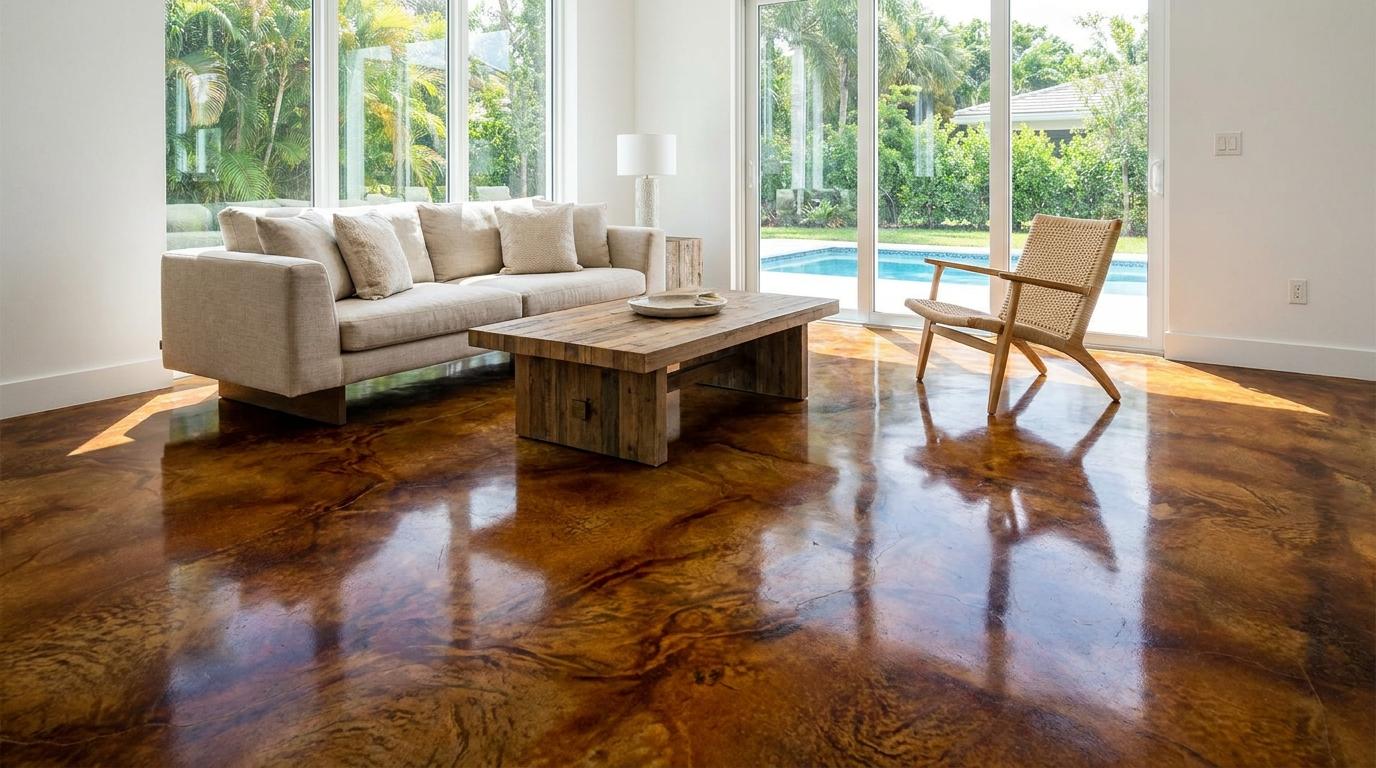
Paint wins on upfront cost, but stain wins on everything that matters after the first year. The color won’t peel, the surface resists wear longer, and the total cost over a decade is lower even with periodic resealing. For any concrete surface in Southwest Florida, stain is the more cost-effective long-term finish.
If your current painted floor is peeling, DecoCrete’s team can assess whether stripping and staining are the right next step. Contact DecoCrete Services at (941) 400-1755 to schedule a free on-site consultation.

Devin Martin is the owner and lead specialist at DecoCrete Services, serving the Sarasota and Manatee County areas. With an eye for design and a focus on structural integrity, Devin specializes in transforming plain concrete into high-end, decorative assets. He is dedicated to providing Gulf Coast homeowners with durable, weather-resistant flooring solutions that blend aesthetic appeal with industrial-grade performance.