A peeling driveway is usually due to one of three things: a topical sealer that has worn out, a coating that never bonded properly, or the concrete itself losing its top layer. DecoCrete Services handles driveway coatings, resurfacing, crack repair, and sealing across the Sarasota area, and identifying which of the three you’re dealing with is the first step to a repair that lasts.
Identify What’s Peeling and Why
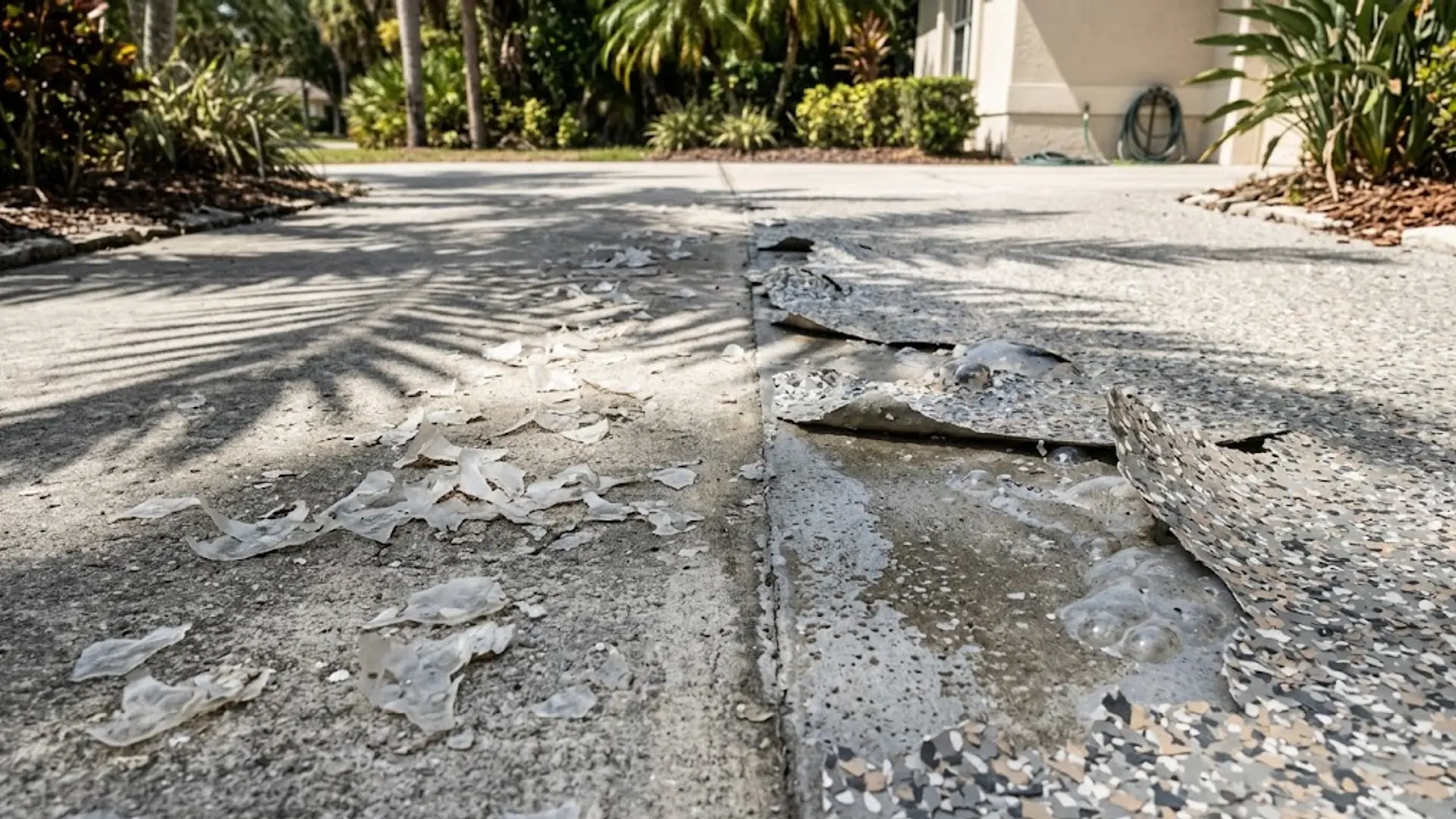
“Peeling” covers a few different failures, and each one needs a different repair. In every case, an upper layer is separating from the stronger material beneath it. That layer might be a sealer, a coating, or the top of the concrete itself.
A Failing Topical Sealer
If the peeling is thin, like clear or tinted plastic flaking off in patches, a topical sealer has likely reached the end of its life. In Sarasota, constant UV breaks down the sealer’s resin, and repeated wet-dry cycles from summer rain stress the film until it lets go. A sealer that was never a good match for the slab or the climate fails even sooner.
Repair path: Strip the old sealer completely, clean the surface, and reseal. For a Florida driveway, a penetrating sealer is usually the better long-term choice, because it soaks into the concrete and leaves no surface film to peel, blister, or turn white.
A Coating Lifting From Poor Prep or Moisture
A coating failure looks different: larger sheets or flakes of a decorative coating separating from the concrete, sometimes with bubbles underneath. That points to a bond problem. Coatings lift when the concrete wasn’t properly cleaned and mechanically prepared before application, or when moisture moving up through the slab gets between the coating and the concrete.
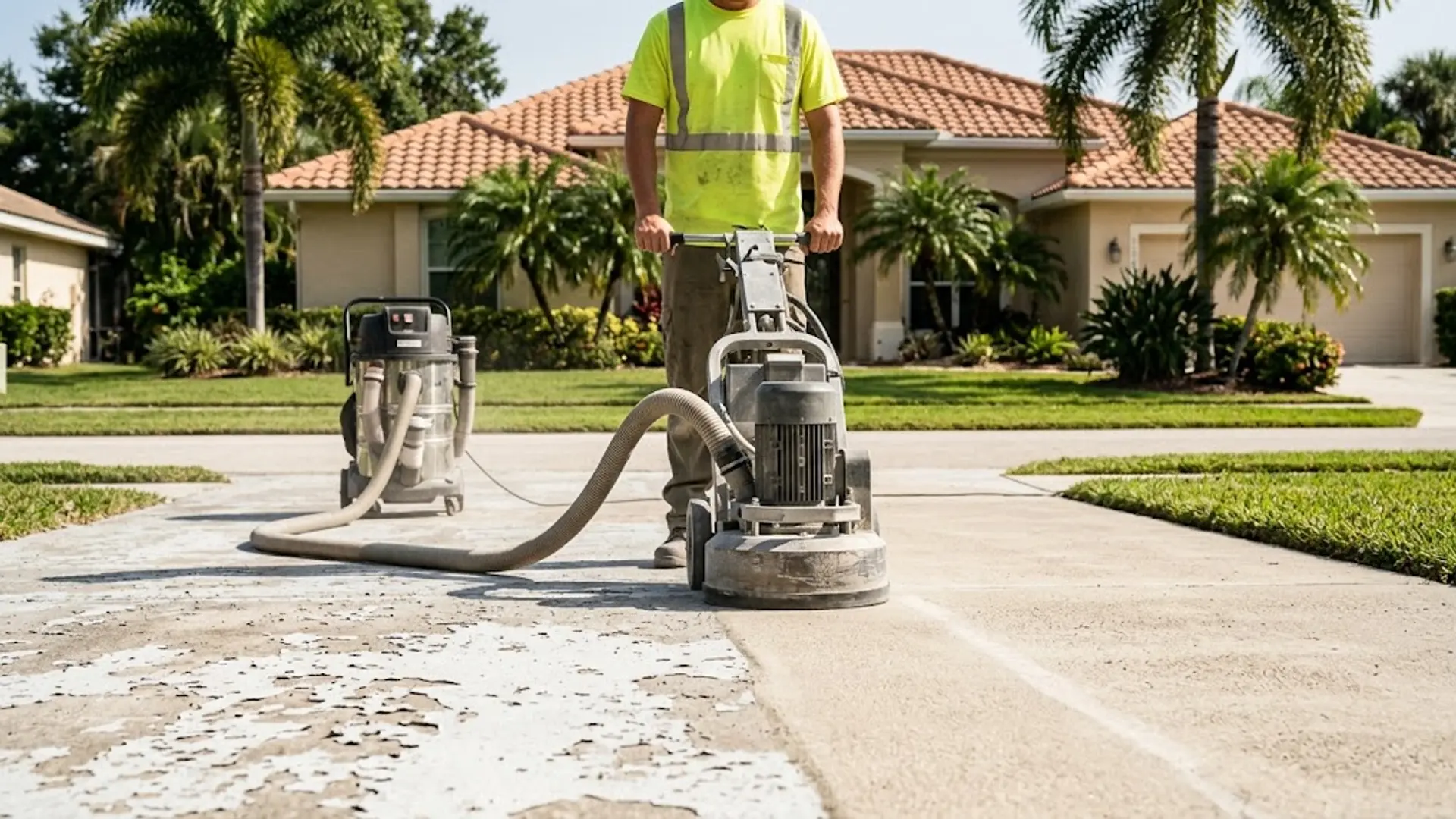
Repair path: Remove the failed coating, prepare the surface correctly, deal with any moisture problem, and recoat. DecoCrete’s driveway process starts with shot blasting or diamond grinding, then mends every crack and imperfection before the base coat, flakes, and UV-stable clear coat go down.
The Concrete Surface Scaling or Spalling
If there’s no coating or sealer and the raw concrete is flaking or crumbling, the problem usually traces back to the original pour. Too much water in the mix, finishing the surface before bleed water evaporated, or poor curing can all leave a weak top layer. That layer holds up for years, then Sarasota’s heat, humidity, and rain wear it down.
Repair path: A sound slab with shallow, stable scaling is often a good candidate for an overlay, which builds a durable new surface on top. Deeper or spreading damage needs a closer look first.
Shallow Damage vs. a Deeper Slab Problem
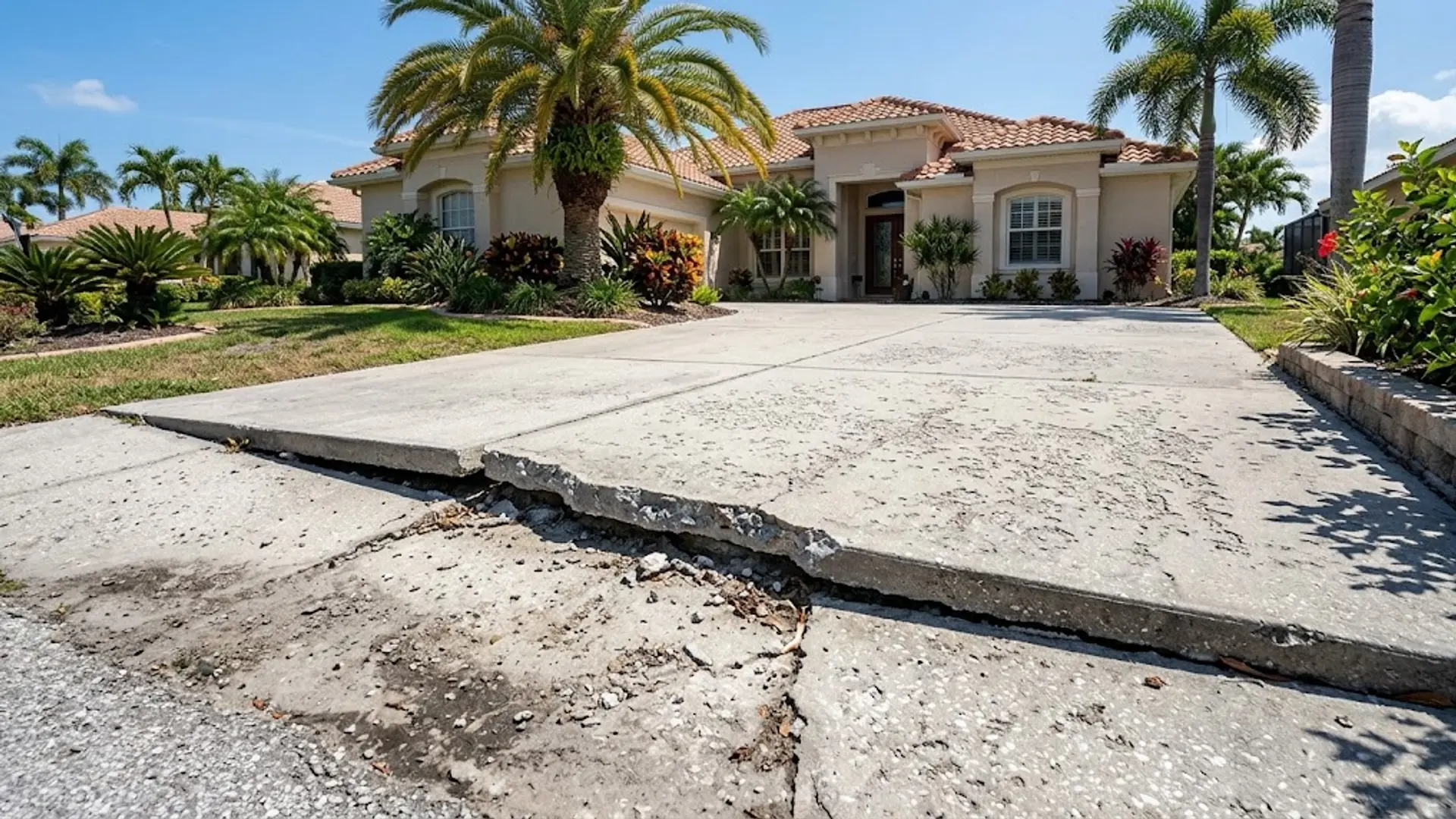
Before choosing a fix, sort the driveway into one of two categories:
- Surface-level damage: Shallow chips, stains, scaling, and hairline cracks on a level, stable slab are generally good candidates for repair and resurfacing.
- Structural damage: Heaving, settlement, shifted sections, or cracks wider than 1/4 inch mean the slab needs more substantial repair, or possibly replacement, before any decorative finish.
An overlay works when the existing concrete is structurally sound, and it should go down only after that has been confirmed. A coating laid over loose material, active cracking, or a moving slab will fail along with the concrete underneath it.
Matching the Repair to the Cause
| What’s Happening | Typical Condition | Repair Approach |
|---|---|---|
| Localized chips or surface wear | Slab is stable | Patch and repair the affected area |
| Widespread shallow scaling or a failed coating or sealer | Slab is stable, damage is surface-level | Resurface or recoat the full driveway |
| Deep cracking, movement, or major separation | Slab condition is uncertain | Corrective repair or replacement before any finish |
A Common Misstep: Sealing Over Active Peeling
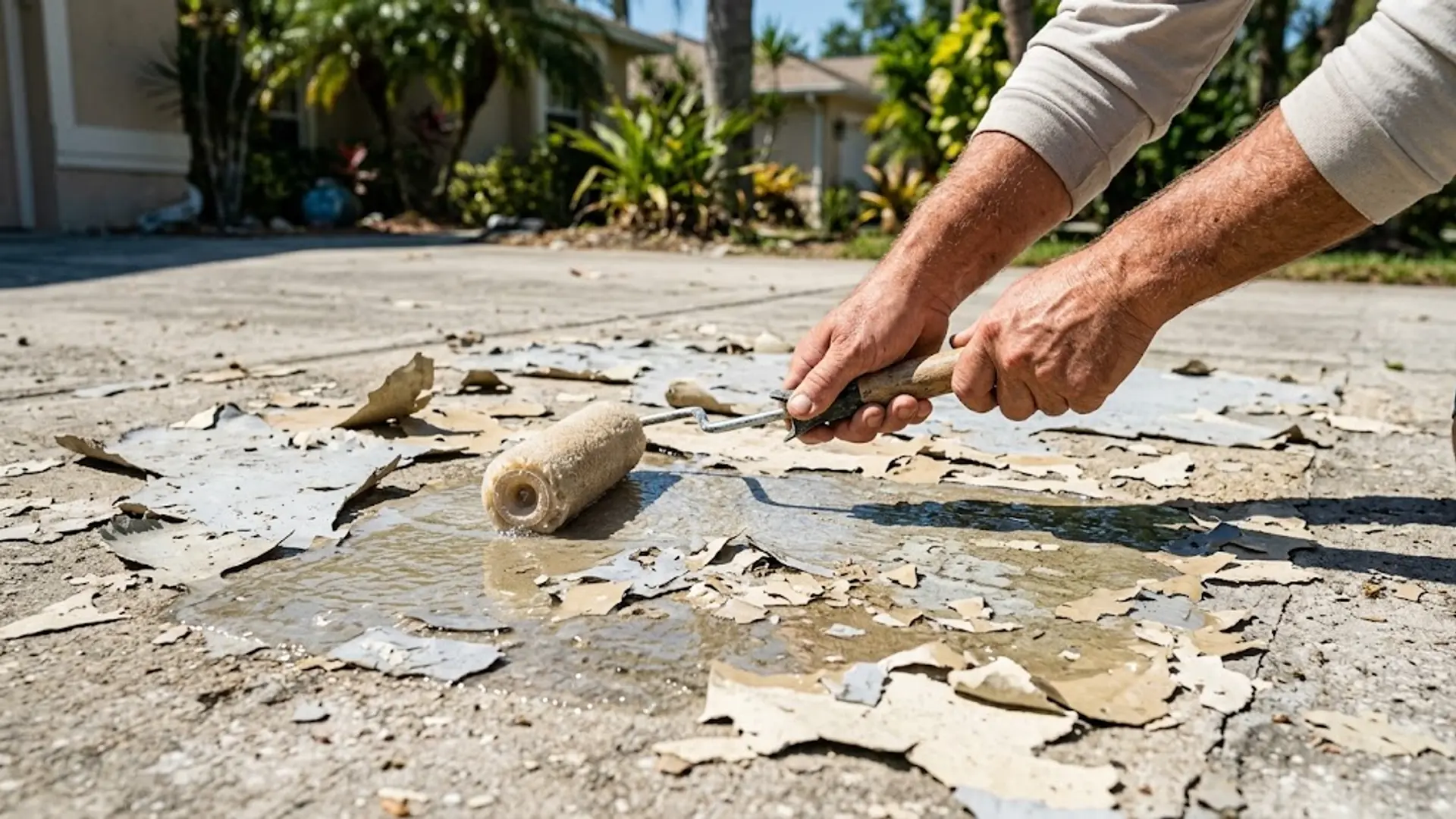
Sealing belongs after repair and preparation. A fresh coat of sealer can’t reattach loose or delaminated material, so sealing over active peeling only delays the real fix, and the new sealer peels away with the old layer.
What Drives the Scope of a Repair
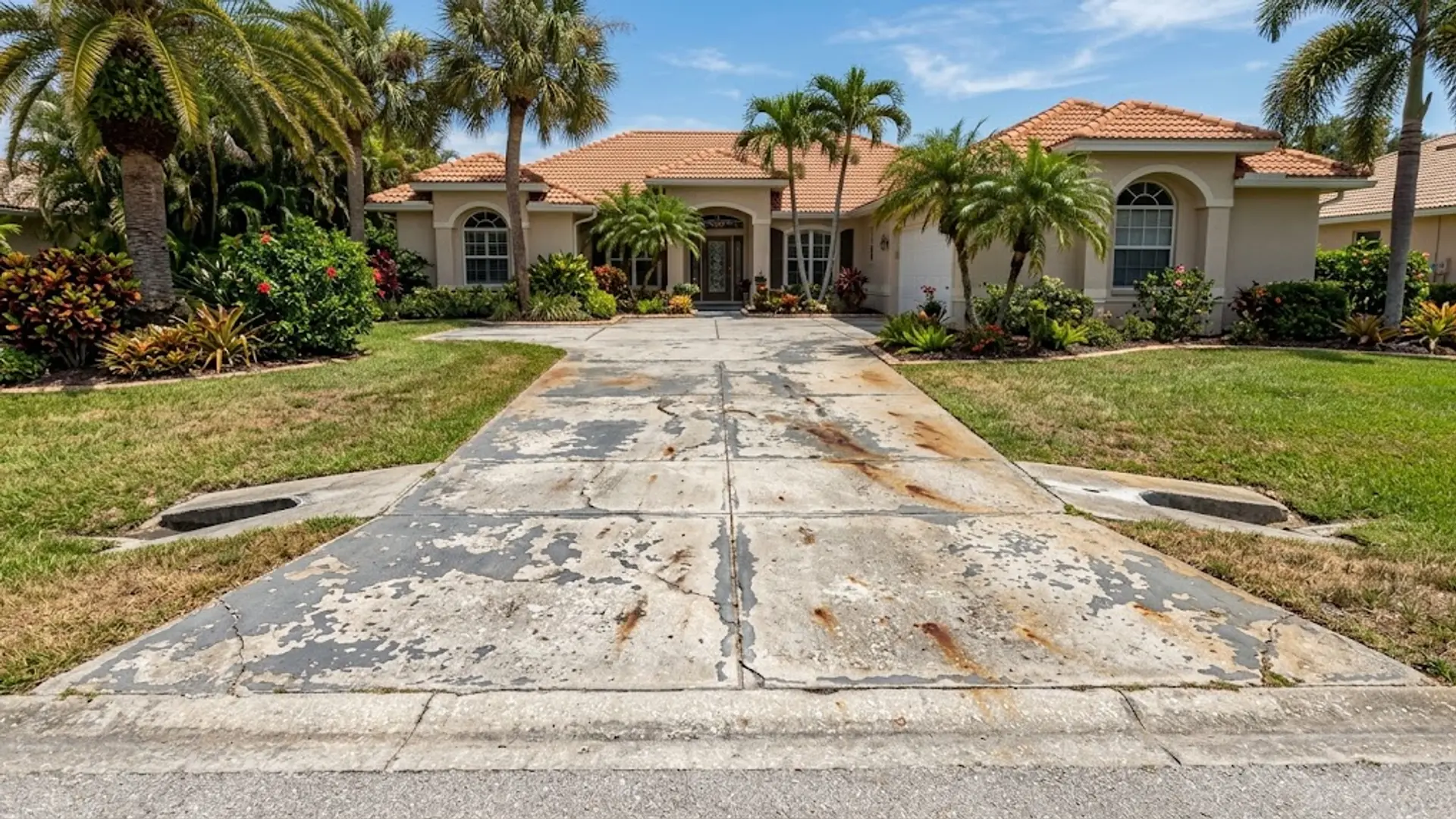
Every driveway is different, and the scope of work depends on:
- How much loose material needs to come off
- The condition of existing cracks and joints
- How much surface preparation the slab needs
- Whether the slab itself is stable
- Which finish system fits the result you want
An on-site look gives a far more accurate answer than photos. DecoCrete Services has handled concrete work since 2008, and founder Devin Martin still oversees every project.
Frequently Asked Questions
Can a peeling concrete driveway be resurfaced, or does it need to be replaced?
A peeling concrete driveway can usually be resurfaced if the slab underneath is level and stable, with only surface-level damage and no cracks wider than 1/4 inch. Heaving, settlement, or shifted sections call for a broader repair, or replacement, before any resurfacing.
How can I tell whether the peeling is from an old coating or the concrete itself?
You can tell whether the peeling is from an old coating or the concrete itself by what comes off. Coating or sealer failure looks like a film or flakes separating from the surface, sometimes with bubbling underneath. If there’s no coating and the raw concrete is crumbling or flaking, the problem is in the slab.
Will sealing stop my driveway from peeling further?
Sealing alone won’t stop a driveway from peeling further, because a sealer can’t reattach concrete or coating that has already lifted. Sealing works best as the final step after the surface has been repaired and properly prepared.
Get a Straight Answer on Your Driveway
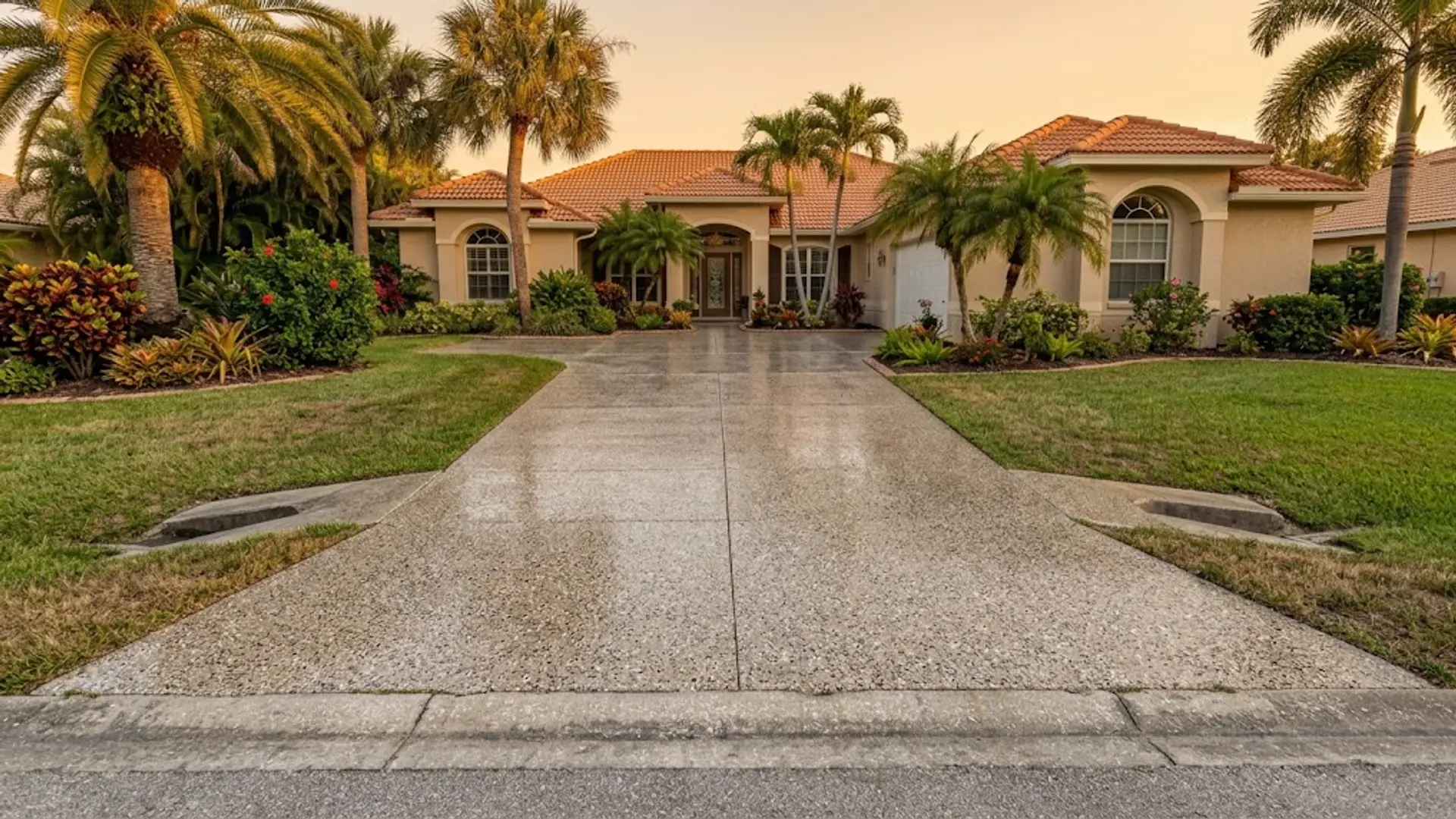
If your driveway in Sarasota, Bradenton, Lakewood Ranch, Siesta Key, or Osprey is peeling, flaking, or losing its coating, DecoCrete Services will tell you which of these problems you’re dealing with and the repair that fits it. Call (941) 400-1755 to talk through what you’re seeing before the damage spreads across the slab.
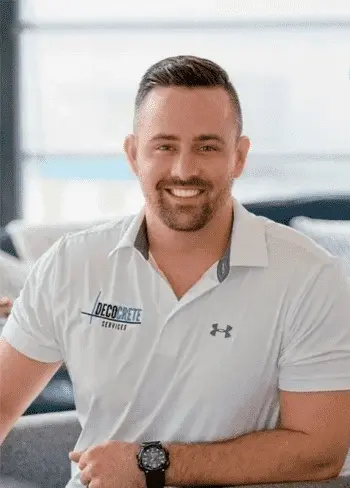
Devin Martin is the owner and lead specialist at DecoCrete Services, serving the Sarasota and Manatee County areas. With an eye for design and a focus on structural integrity, Devin specializes in transforming plain concrete into high-end, decorative assets. He is dedicated to providing Gulf Coast homeowners with durable, weather-resistant flooring solutions that blend aesthetic appeal with industrial-grade performance.