
Epoxy floor maintenance in Florida comes down to three habits: sweep and mop regularly with a pH-neutral cleaner, keep harsh products and high-pressure water off the surface, and recoat on schedule. Do that, and an epoxy floor lasts 5 to 10 years before it needs a fresh top coat. For a polyaspartic floor, you can get 10 to 20 years of service life. Skip these steps, and Florida’s humidity does the rest, trapping moisture under the coating until it bubbles and peels far faster than it would in a drier climate.
That humidity is the real enemy here. Sarasota summers sit above 80% for months, and garage floors take the worst of it, which is why seasonal upkeep matters more in Florida than almost anywhere else. DecoCrete Services installs epoxy and polyaspartic residential concrete coatings across Sarasota and Manatee County. Below, the cleaning routine, the products to avoid, and the seasonal checks that keep a coating from failing early.
Daily and Weekly Cleaning Basics
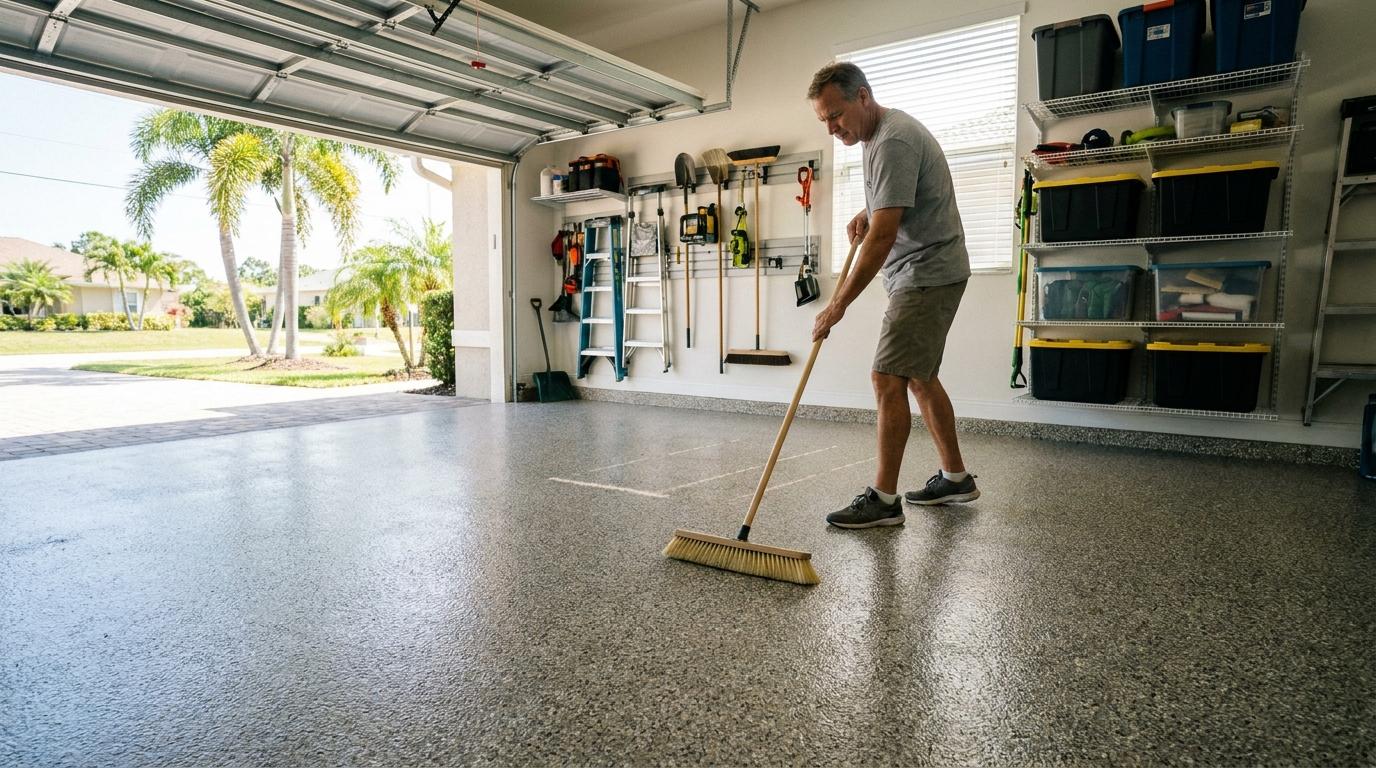
Dust, sand, and grit act like sandpaper on coated floors. A daily sweep with a soft-bristle push broom removes abrasive particles before they scratch the clear coat. In Florida, where garage doors stay open for ventilation, sand and pollen accumulate faster than in enclosed climates.
Weekly Mopping
Mop once a week with a microfiber flat mop and a neutral pH cleaner diluted in warm water. A few drops of dish soap in a gallon of water works if you don’t have a dedicated floor cleaner. Wring the mop until it’s barely damp because standing water left on coated concrete encourages moisture migration from below.
Spill Response
Wipe up oil, brake fluid, and chemical spills within 30 minutes. Epoxy resists most automotive fluids, but prolonged contact with battery acid or transmission fluid can soften the surface layer. Polyaspartic coatings handle chemical exposure better, though prompt cleanup still extends the finish.
Products and Tools to Avoid on Coated Floors
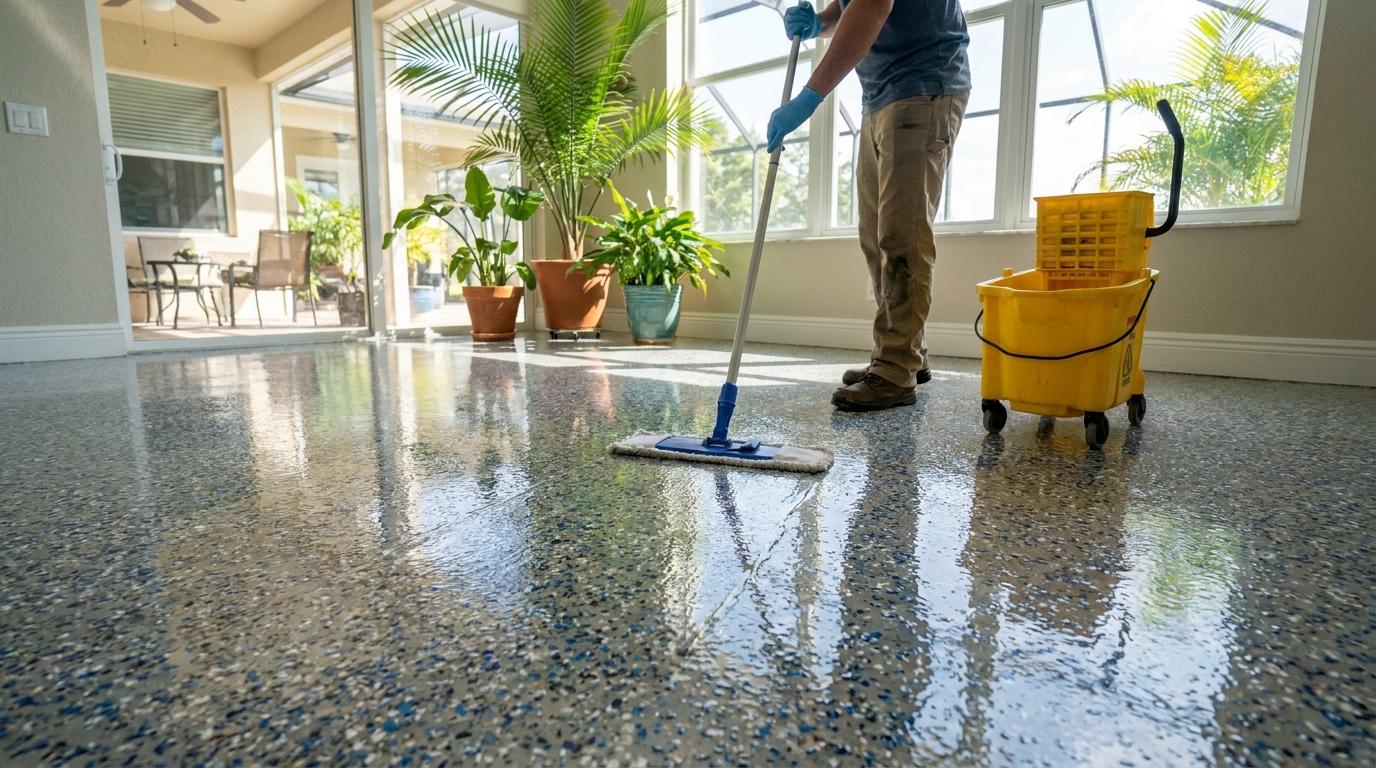
The wrong cleaner does more damage than skipping a cleaning day. The following products degrade coating chemistry or scratch the surface:
- Citrus-based degreasers: the acid strips the clear coat’s gloss over time
- Vinegar or acidic cleaners: same acid damage, visible dulling within months
- Steel wool or abrasive scrub pads: they cut through the top coat to the base layer
- Pressure washers above 1,500 PSI: high pressure lifts edges and forces water under the coating
- Harsh solvents like acetone or lacquer thinner: they dissolve epoxy resin on contact
Sticking to pH-neutral cleaners and soft tools is the simplest way to protect your coating. The difference between proper and improper products determines whether a concrete coating holds its finish long-term or starts showing damage within the first year.
Seasonal Maintenance for Florida’s Climate
Summer: Humidity and UV Checks
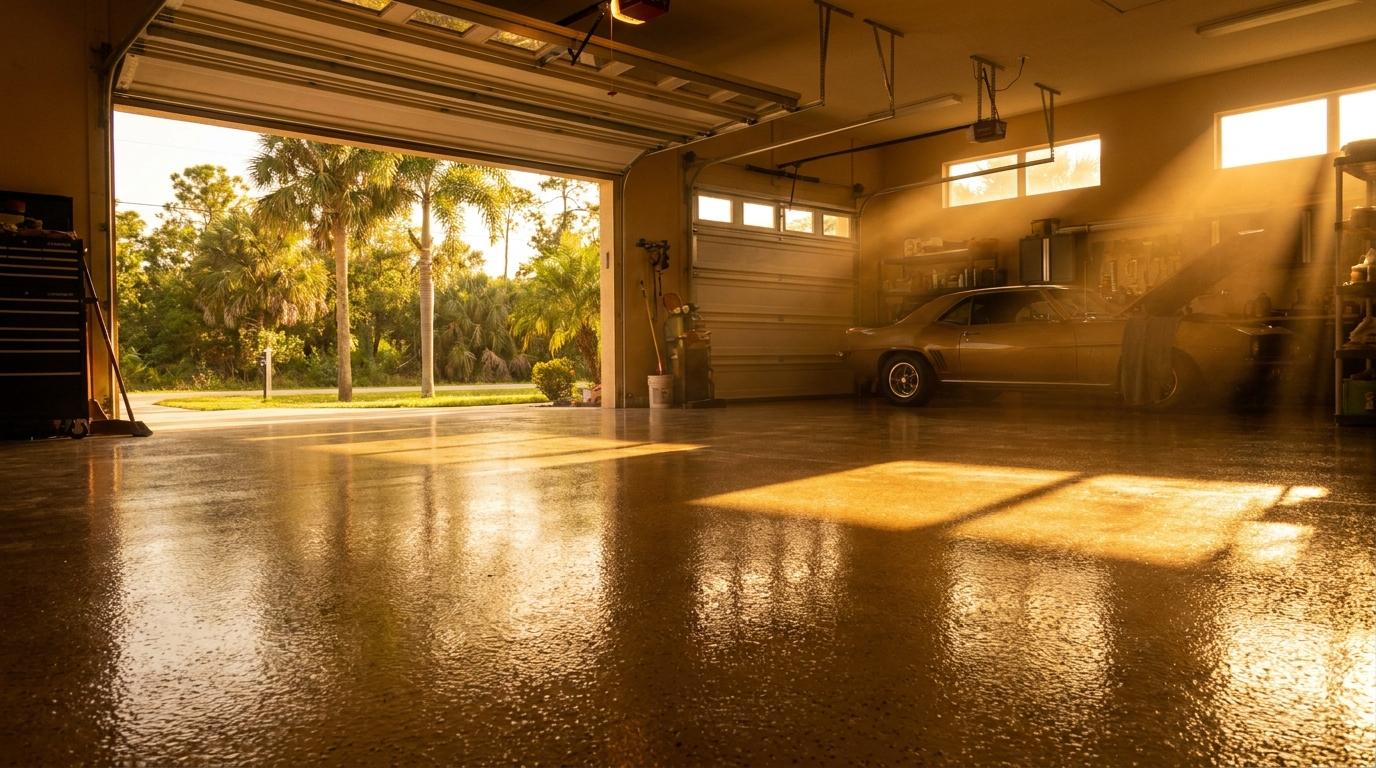
Sarasota’s summer humidity peaks near 80% in August, and moisture vapor pressure increases beneath concrete slabs. Check for cloudy spots or small bubbles in the coating surface, which signal moisture migration from below. If the garage faces south or west, UV exposure through the open door can yellow standard epoxy within two to three summers. Polyaspartic coatings resist UV yellowing, which is one reason they outperform traditional epoxy in Florida garages.
Storm Season: Water Intrusion
After heavy rain or flooding, inspect the garage floor edges and the joint where the slab meets the walls. Water that pools against coated concrete can work under the edges and cause peeling. Squeegee standing water out promptly and let the surface air-dry completely before parking vehicles. The coating type on the floor determines how well it handles repeated water exposure, and the performance gap between garage floor coating types widens significantly in garages that flood during storm season.
Annual: Resealing Schedule
Most epoxy systems in Florida benefit from a fresh top coat every 5 to 7 years. Polyaspartic systems typically go 10 years or more before recoating. That recoating gap is one of the reasons polyaspartic has replaced standard epoxy flooring in Sarasota garages over the past decade. The signs that it’s time are consistent: the surface feels rougher underfoot, the gloss has dulled across high-traffic areas, or stains that used to wipe off now absorb into the surface.
Frequently Asked Questions
Can you use a pressure washer on an epoxy garage floor?
You can use a pressure washer on an epoxy garage floor if you keep the pressure below 1,500 PSI and use a wide fan tip. Pressure above that threshold forces water under the coating edges and lifts the bond from the concrete. A garden hose with a spray nozzle handles most cleaning tasks safely without risking the seal.
How often should you mop a polyaspartic garage floor in Florida?
A polyaspartic garage floor in Florida should be mopped once a week with a damp microfiber mop and a neutral pH cleaner. Weekly mopping removes the salt, sand, and pollen that accumulate faster in humid coastal climates like Sarasota. DecoCrete Services recommends increasing the frequency to twice weekly during summer when garage doors stay open more often.
Does Florida humidity cause epoxy floors to peel?
Florida humidity does not directly cause epoxy floors to peel, but moisture vapor trapped beneath the slab creates pressure that breaks the bond over time. The coating itself resists surface moisture. The failure happens when the concrete substrate was not properly tested for moisture content before installation. Proper diamond grinding and moisture testing during installation prevent this failure mode entirely.
Keep Your Coated Floors Looking New for Years
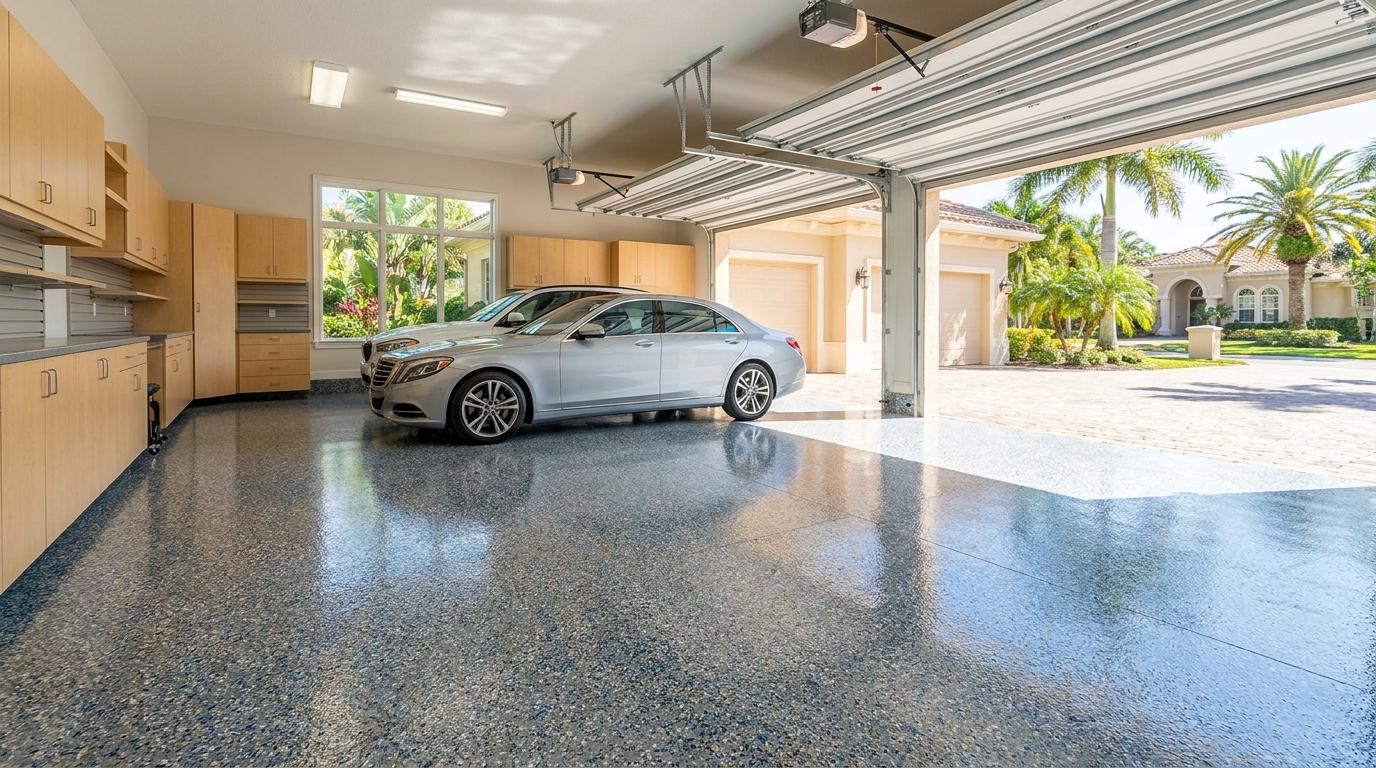
A coated floor doesn’t fail on its own. It fails from neglect or the wrong cleaner. Sweep it, mop it with something pH-neutral, check it after the worst of the summer humidity, and recoat it when the gloss starts to go. Keep the acetone, the citrus degreasers, and the pressure washer away from it. Do that much and the floor will outlast the warranty.
For a free floor coating estimate in Sarasota or Manatee County, contact DecoCrete Services at (941) 400-1755.

Devin Martin is the owner and lead specialist at DecoCrete Services, serving the Sarasota and Manatee County areas. With an eye for design and a focus on structural integrity, Devin specializes in transforming plain concrete into high-end, decorative assets. He is dedicated to providing Gulf Coast homeowners with durable, weather-resistant flooring solutions that blend aesthetic appeal with industrial-grade performance.