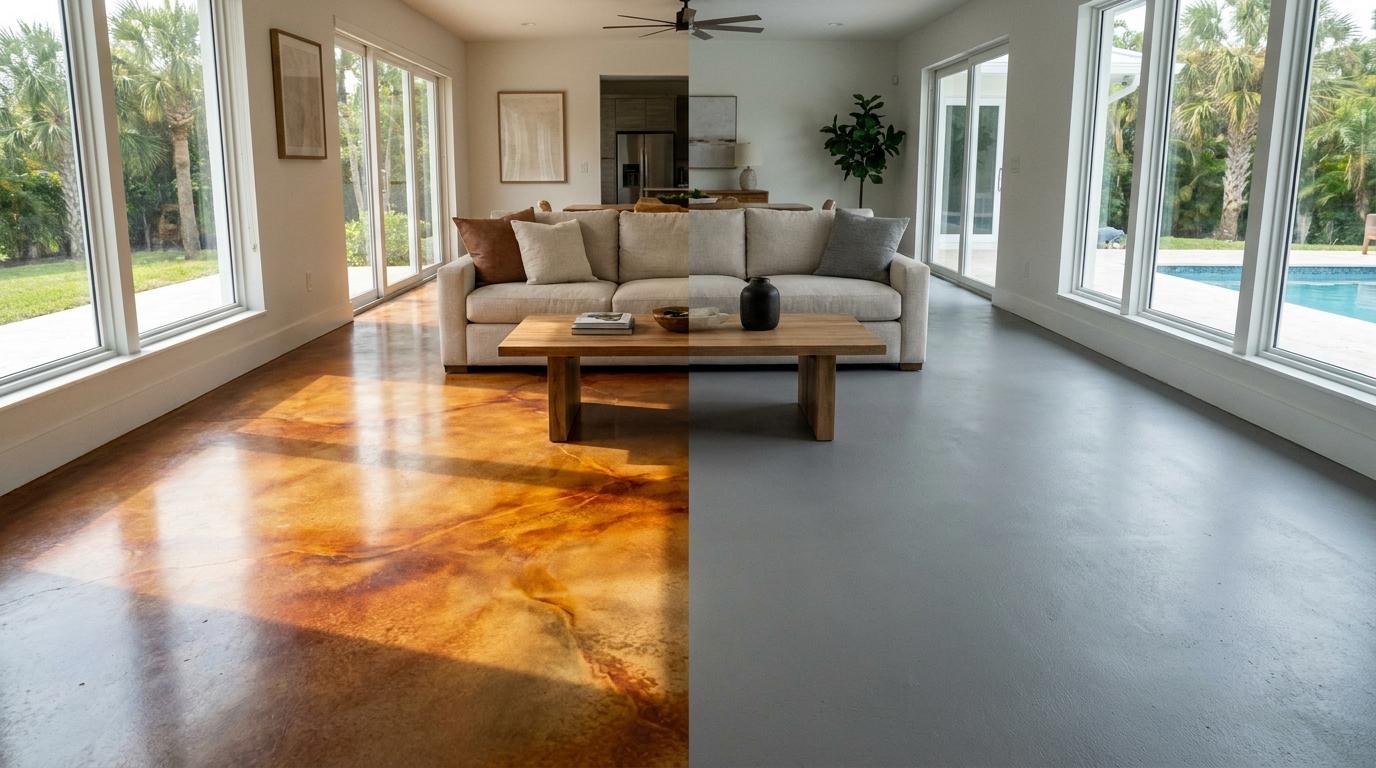
Epoxy flooring pros and cons vary significantly depending on the climate and application. In Sarasota, epoxy delivers excellent chemical resistance and aesthetic options at $3-$12 per square foot installed, but its UV sensitivity and heat tolerance limitations make it better suited for interior applications than garages with direct sun exposure. DecoCrete Services installs both epoxy and polyaspartic systems across Southwest Florida and explains what performs best where.
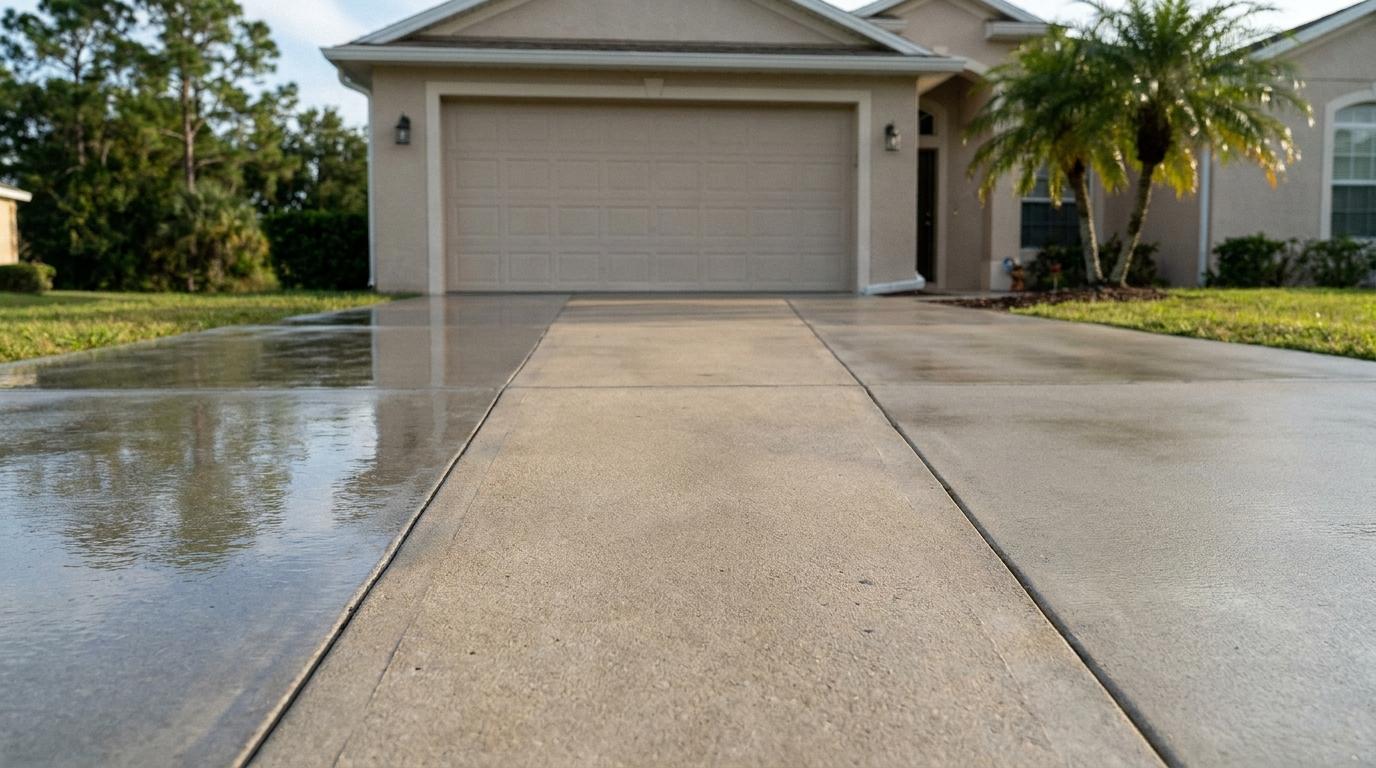
Standard epoxy is rated for 5-10 years in most markets. In Florida garages without climate control, that number drops closer to 3-5 years. The culprit isn’t traffic or chemicals. It’s the combination of UV penetration through open garage doors and radiant heat from parked vehicles that softens the coating from above and below.
Advantages of Epoxy Flooring for Florida Homes
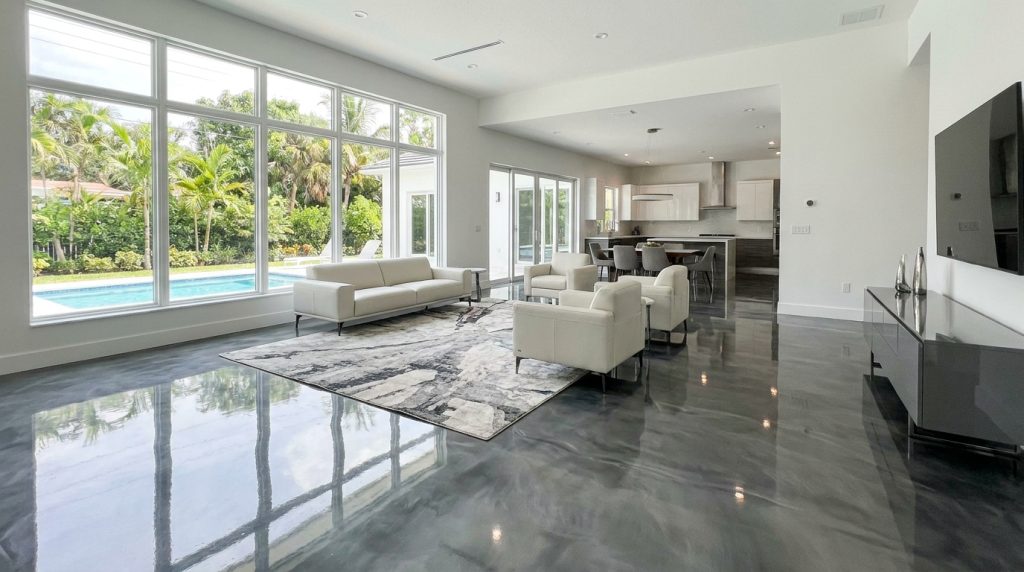
Epoxy is a proven system for the right applications in Florida homes.
Chemical and Stain Resistance
Epoxy creates a non-porous surface that resists oil, gasoline, brake fluid, and household chemicals. Spills wipe up without staining. For interior spaces like laundry rooms, workshops, and high-traffic commercial areas, this chemical barrier is a significant advantage over bare or sealed concrete.
Design Flexibility
Epoxy comes in solid colors, metallic finishes, quartz blends, and decorative flake systems. Metallic epoxy creates flowing, one-of-a-kind patterns that work well in Florida homes with open floor plans. Color flake systems offer a more textured, slip-resistant surface. The range of garage floor coating types available gives homeowners options from subtle to dramatic.
Cost-Effective for Interior Applications
Standard epoxy starts at $3-$8 per square foot installed, making it one of the most affordable professional flooring upgrades. For a 400 sq ft interior space, expect $1,200-$3,200. In climate-controlled environments protected from UV and heat extremes, epoxy delivers strong value per dollar.
Disadvantages and Limitations in Florida’s Climate
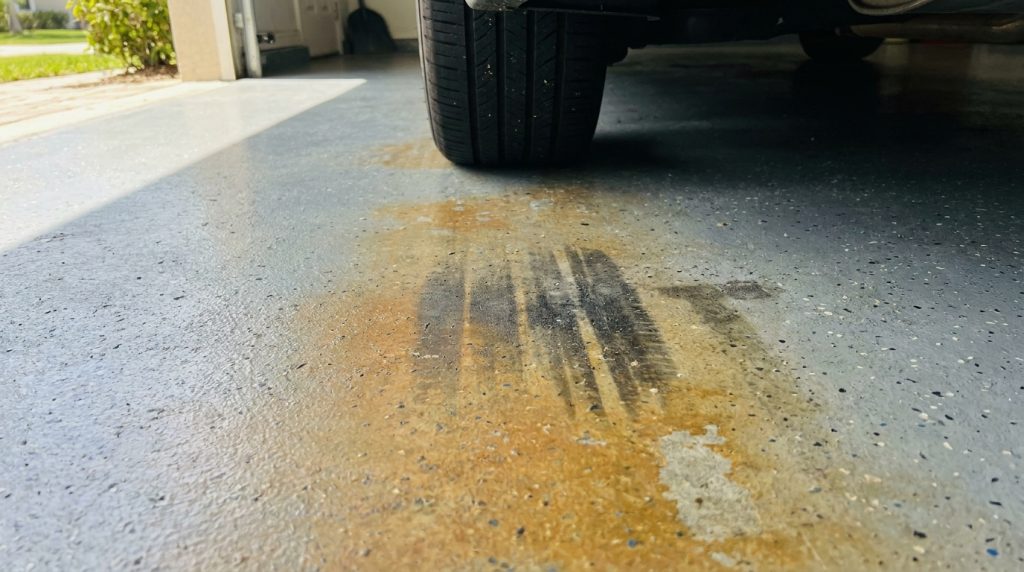
Epoxy’s limitations become most apparent in unconditioned spaces exposed to Florida’s heat and UV cycles.
UV Yellowing and Fading
Standard epoxy is not UV-stable. In garages where the door opens daily, direct sunlight causes yellowing within 1-2 years. The areas nearest the garage door discolor first, creating an uneven appearance that worsens over time. Interior-only applications avoid this issue entirely.
Hot-Tire Pickup
When a car parks on epoxy after driving in Florida summer heat, the tire temperature can soften the coating surface. Over time, this causes the coating to peel away with the tire, leaving bare spots. This problem is specific to lower-grade epoxy systems that lack heat-stable chemistry.
Moisture Sensitivity During Installation
Epoxy won’t bond properly to concrete with high moisture vapor content. Sarasota’s humidity, and the coastal moisture across Bradenton and Siesta Key, means concrete slabs often carry more moisture than epoxy can tolerate without delamination. Professional moisture testing before installation is critical here.
Epoxy vs. Polyaspartic: Which System Lasts Longer Here?

For garages and outdoor-adjacent spaces in Florida, polyaspartic coatings solve epoxy’s three biggest weaknesses: UV stability, heat tolerance, and cure time.
Polyaspartic, a fast-curing coating system that outperforms traditional epoxy in Florida’s climate, is 100% UV-stable and won’t yellow or soften under hot tires. DecoCrete’s garage floor coating system uses a three-part polyurea polyaspartic process that installs in one day and is backed by a lifetime warranty. Where epoxy costs $3-$8 per square foot, polyaspartic runs $5-$7 per square foot with a 15-25 year expected lifespan in Florida conditions versus epoxy’s 3-5 years in unconditioned garages.
Frequently Asked Questions
Is epoxy flooring slippery when wet?
Smooth epoxy can be slippery when wet. Adding a non-skid aggregate to the topcoat or choosing a flake system with broadcast texture solves this. DecoCrete Services includes texture in every garage and outdoor application specifically for slip resistance in Florida’s rain-prone climate.
How long does epoxy take to install and cure?
Professional epoxy installation takes 2-3 days including surface prep, coating application, and cure time. Full vehicle traffic is typically safe after 5-7 days. Polyaspartic systems complete the same process in a single day with full use within 24-48 hours.
Can I apply epoxy over my existing garage floor paint?
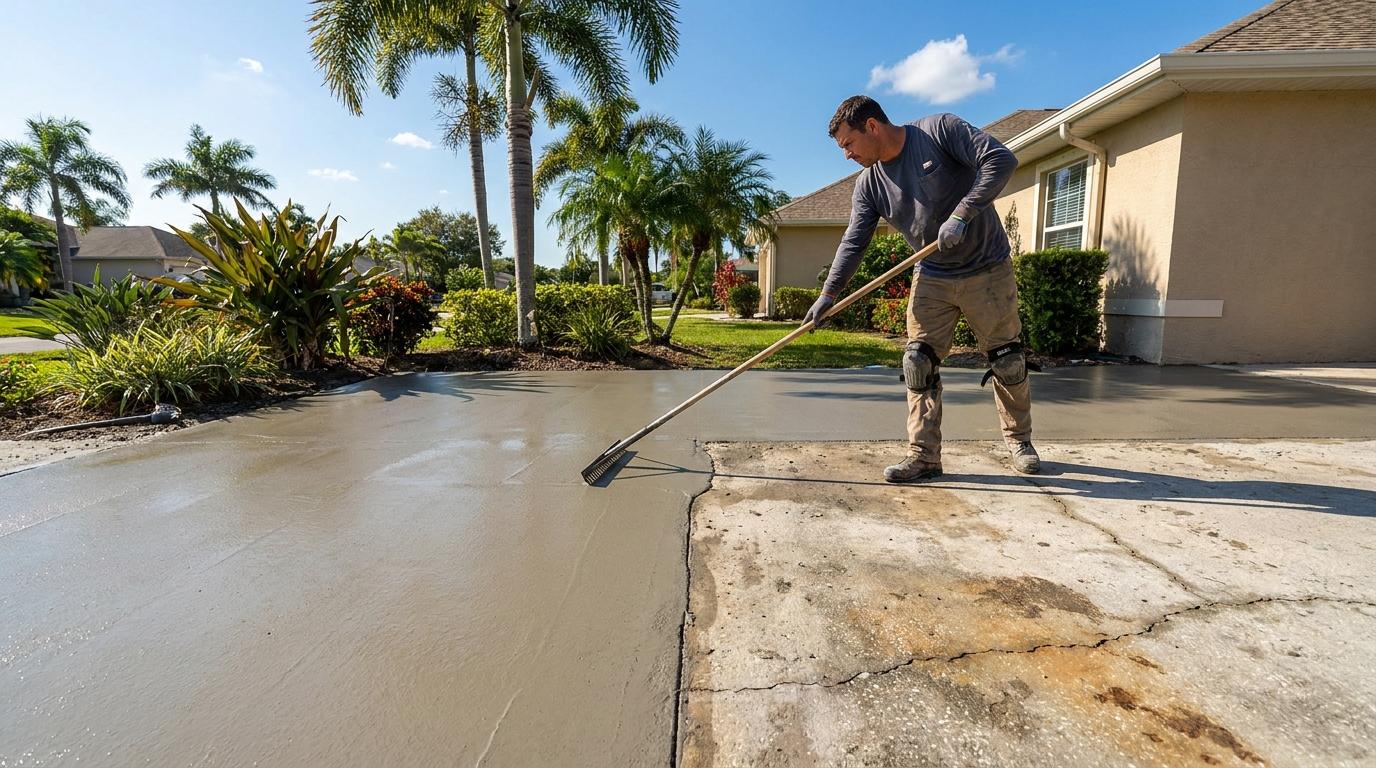
Epoxy won’t bond reliably to painted concrete. The existing paint must be removed through diamond grinding or shot blasting before application. Applying over paint leads to delamination, usually within the first year. Professional prep includes removing all previous coatings down to bare concrete.
Match the System to the Space
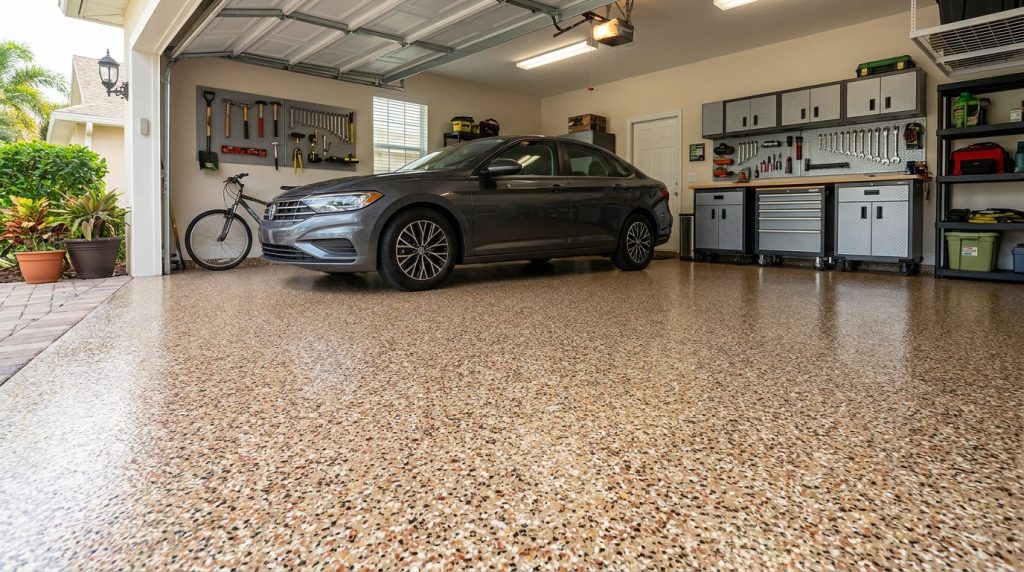
Epoxy still has its place in Florida: laundry rooms, climate-controlled workshops, and interior spaces where UV and heat never reach the surface. The mistake is putting it in a Sarasota garage with a south-facing door and expecting it to last past year three. Polyaspartic costs about the same per square foot, lasts three to five times longer in unconditioned spaces, and can be installed in a single day instead of a week.
Contact DecoCrete Services for a free flooring consultation or call (941) 400-1755 to discuss which system fits your space.

Devin Martin is the owner and lead specialist at DecoCrete Services, serving the Sarasota and Manatee County areas. With an eye for design and a focus on structural integrity, Devin specializes in transforming plain concrete into high-end, decorative assets. He is dedicated to providing Gulf Coast homeowners with durable, weather-resistant flooring solutions that blend aesthetic appeal with industrial-grade performance.