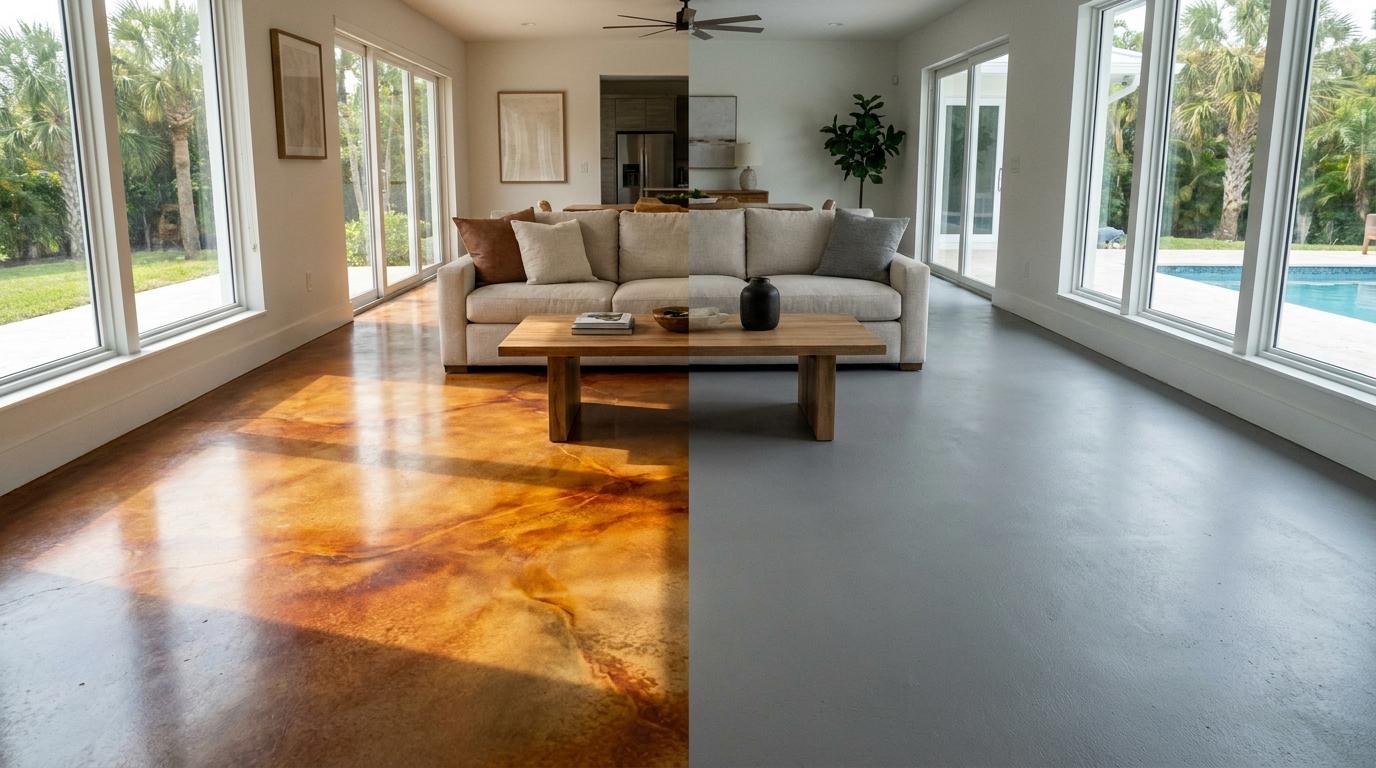
Polished concrete floors cost $3-$8 per square foot, last over 20 years with minimal maintenance, and eliminate grout mold issues common in Florida tile. The tradeoffs are hardness underfoot, potential slipperiness when wet, and the fact that it’s not a DIY project. DecoCrete Services polishes residential concrete throughout Sarasota and Manatee County and provides an honest assessment below.
You’re probably weighing polished concrete against tile replacement or an epoxy coating. Both comparisons come up constantly in our consultations with Sarasota homeowners. Each option solves a different problem. The right choice depends on where the floor is installed, what’s underneath it now, and how much future maintenance you want to avoid.
Advantages of Polished Concrete for Florida Homes
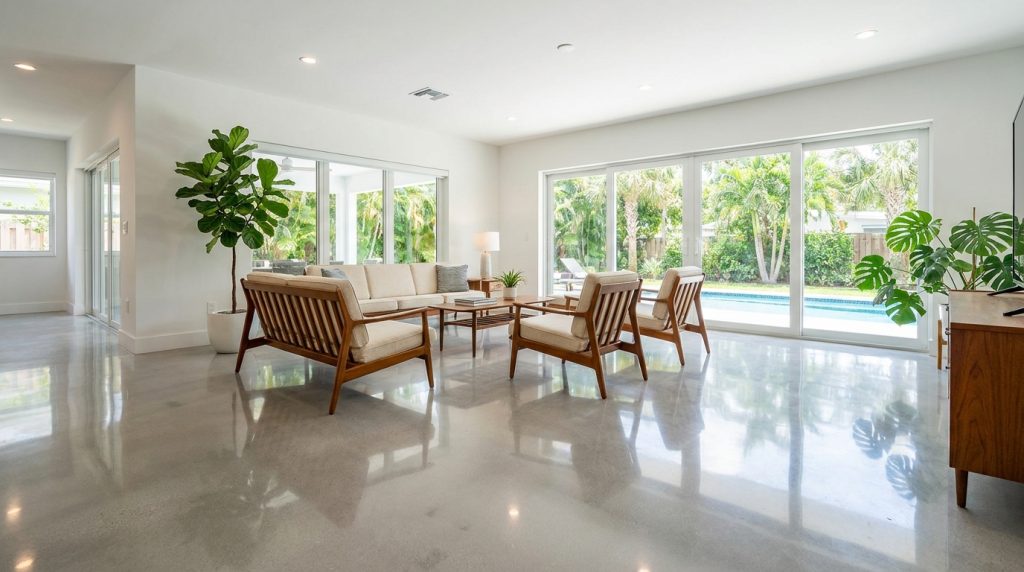
Polished concrete has become one of the fastest-growing residential flooring choices in Southwest Florida for practical reasons beyond aesthetics.
Durability and Lifespan
A polished concrete floor typically lasts 20+ years without needing replacement, refinishing, or recoating. The polish is ground into the concrete itself, not layered on top, so it can’t peel, delaminate, or wear through the way coatings and finishes do. Routine maintenance means occasional mopping. No waxing, no sealing, no grout cleaning.
No Grout Mold in Florida’s Humidity
Tile floors in Sarasota homes develop grout mold and mildew within years because of year-round humidity. Polished concrete has zero grout lines. The seamless surface gives moisture and mold nothing to colonize, which makes it particularly well-suited for Florida’s climate.
Cost-Effective Compared to Alternatives
At $3-$8 per square foot, polished concrete costs less than porcelain tile ($5-$15/sq ft installed) and significantly less than hardwood ($8-$25/sq ft). Since it uses the existing slab, there’s no demolition cost. For Lakewood Ranch homeowners with newer slabs in good condition, polishing is often the most cost-effective upgrade available.
Disadvantages and Limitations to Consider
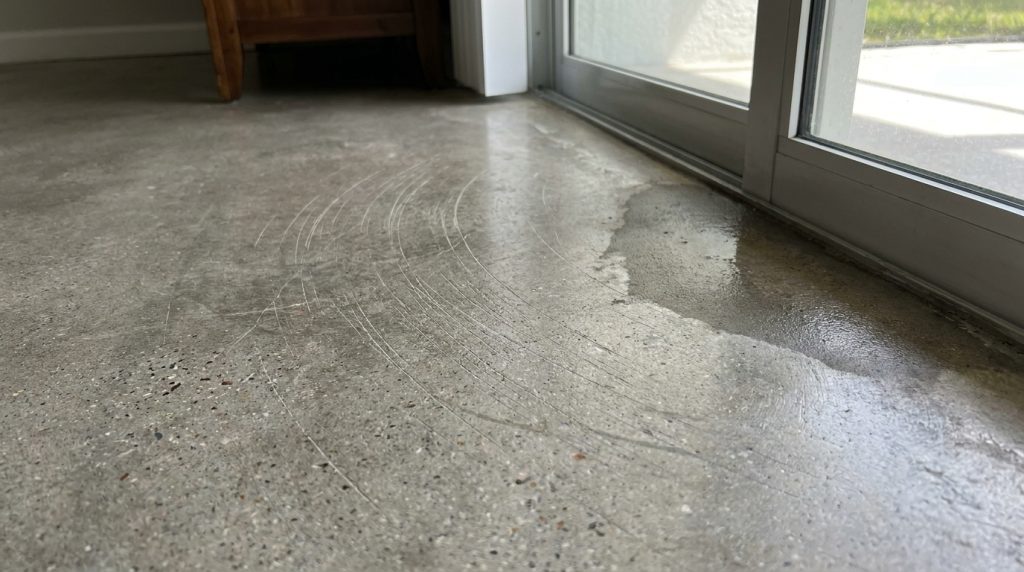
Polished concrete isn’t the right fit for every room or every homeowner. These are the real limitations.
Hard Surface Underfoot
Concrete is unforgiving on feet and joints during long periods of standing. Kitchens where you cook daily and playrooms where children spend time on the floor benefit from area rugs. The surface won’t damage, but comfort during extended standing is a genuine drawback compared to wood or luxury vinyl.
Slippery When Wet at High Gloss
Level 3 (high gloss) polished concrete becomes slippery when wet. For bathrooms, pool-adjacent rooms, or kitchens with frequent spills, a matte or satin finish (Level 1 or 2) provides better traction. Non-slip treatments can also be applied to specific zones without affecting the overall appearance.
Slab Condition Dependency
Not every existing slab polishes well. Concrete that’s too soft, severely cracked, or previously patched with mismatched materials may not achieve a uniform finish. An on-site assessment is necessary before committing. Slabs that aren’t suitable for polishing can often be stained or coated instead.
Where Polished Concrete Works Best (and Where It Doesn’t)
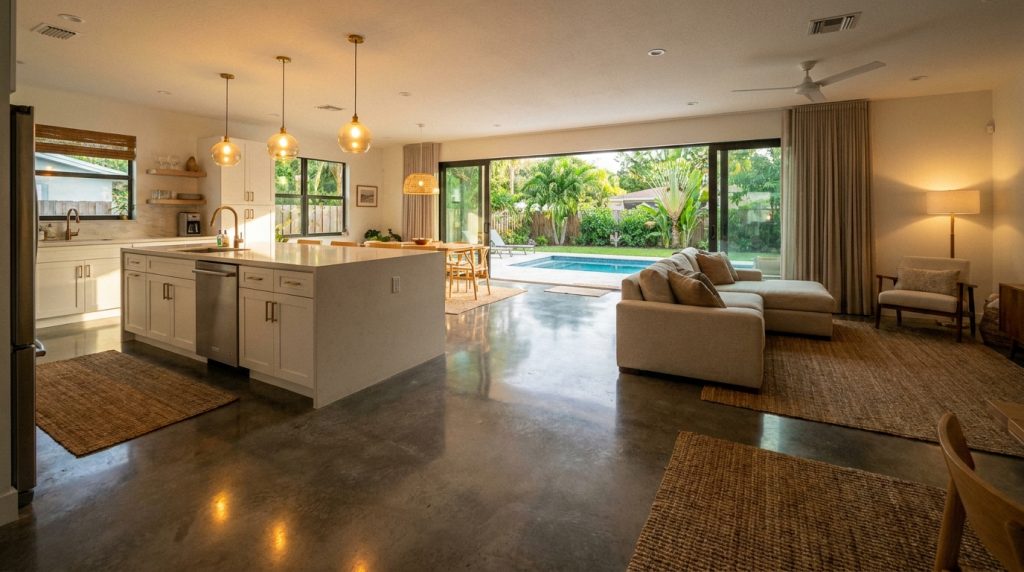
Placement matters more than the polishing itself when it comes to long-term satisfaction.
Ideal Rooms
- Living rooms, great rooms, and open-concept main floors
- Home offices and studios
- Sunrooms and Florida rooms with climate control
- Entryways and hallways with high traffic
Better Alternatives for These Spaces
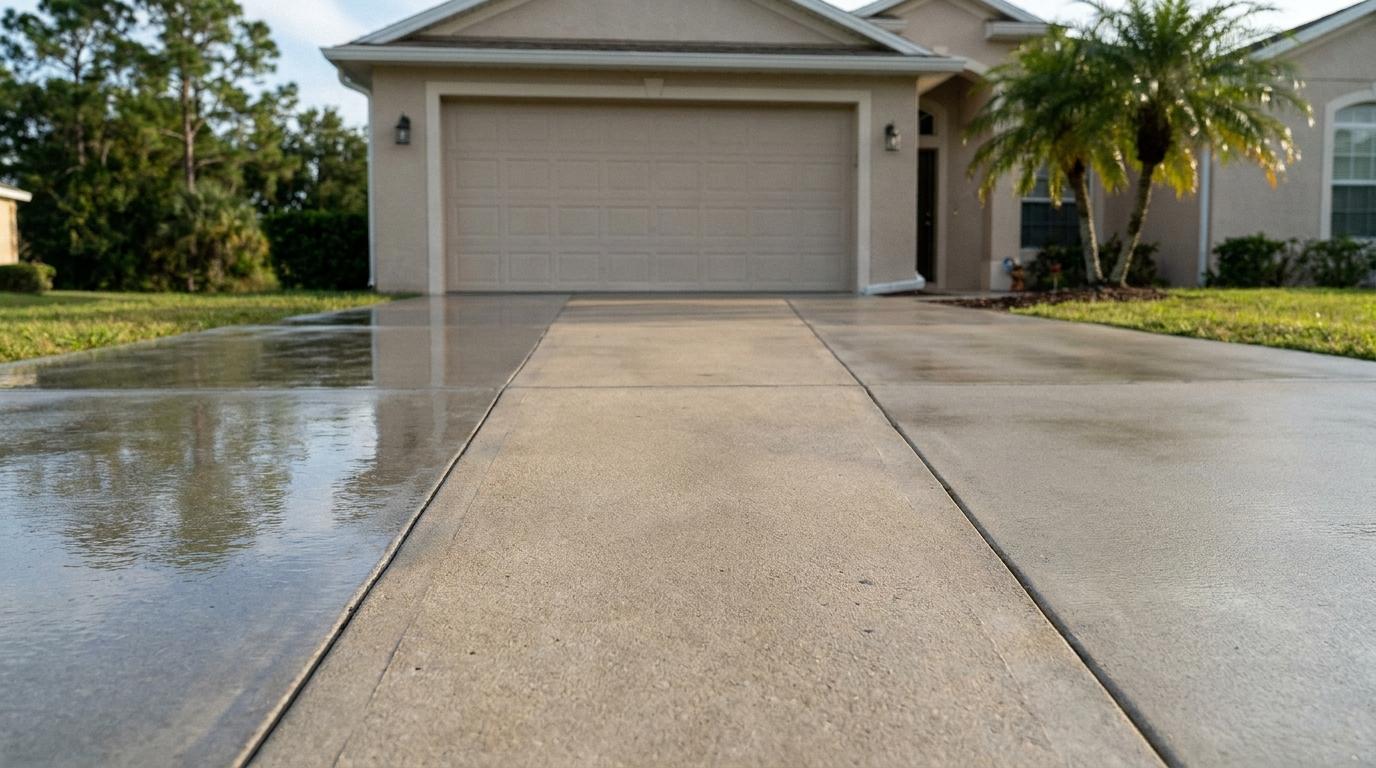
- Garages: temperature swings and tire traffic favor polyaspartic coatings
- Outdoor pool decks: need slip-resistant texture coatings
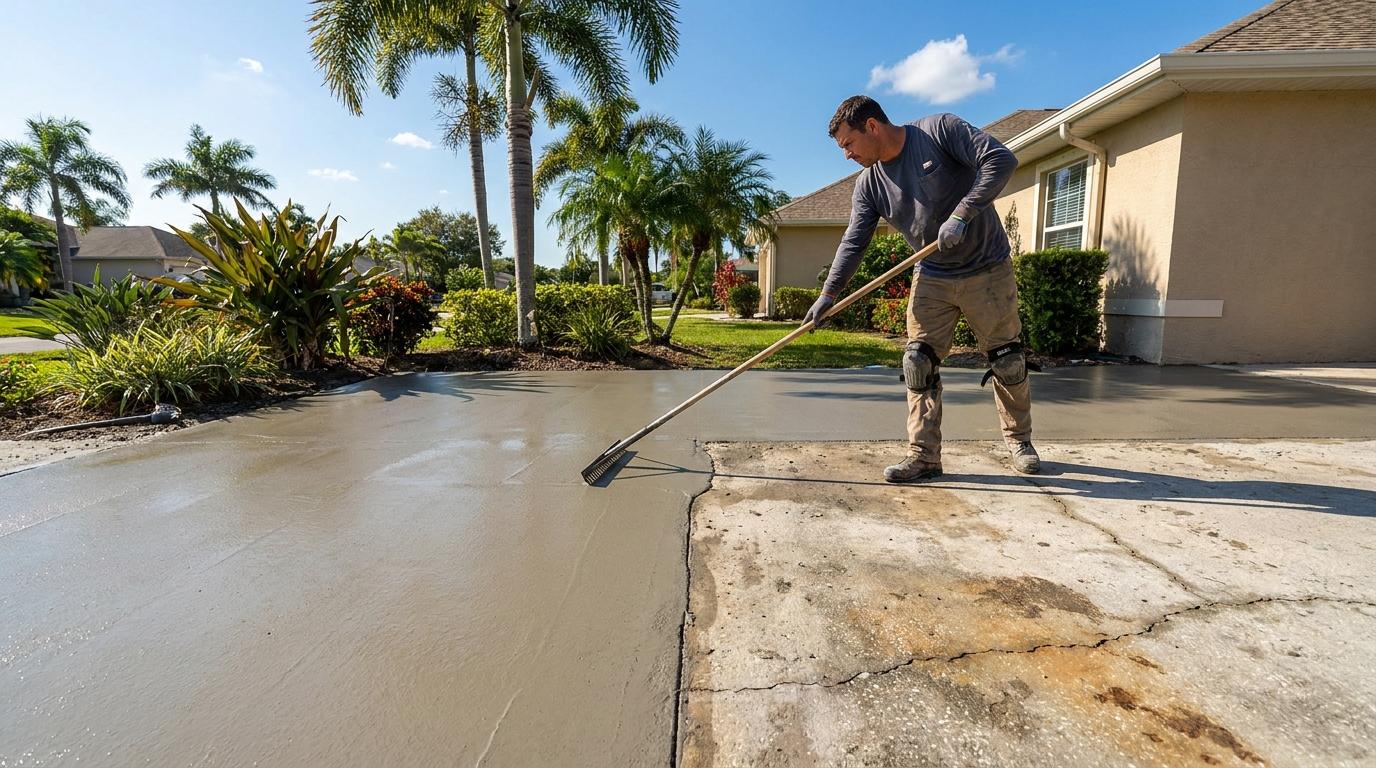
- Rooms with structural slab damage: epoxy or overlay systems cover imperfections that polishing would expose)
Frequently Asked Questions
Does polished concrete crack over time?
Polished concrete floors don’t crack because of the polishing process. Cracks that appear are in the underlying slab itself, caused by settling, soil movement, or structural stress. Polishing reveals these rather than causing them. Minor hairline cracks can be filled during the polishing process.
Can I add color to polished concrete?
Yes. Acid stains create natural mottled color with earth tones, while concrete dyes produce more uniform, vibrant colors. DecoCrete Services applies stain or dye during the polishing process so the color is locked into the surface and protected by the final polish passes.
How does polished concrete handle Florida humidity?
Polished concrete performs well in humidity because it doesn’t trap moisture the way tile grout or wood does. The densified surface resists moisture penetration. However, condensation can form on the surface during rapid temperature changes, which is why a matte finish is recommended for spaces near exterior doors that open frequently.
Decide Whether Polished Concrete Fits Your Home
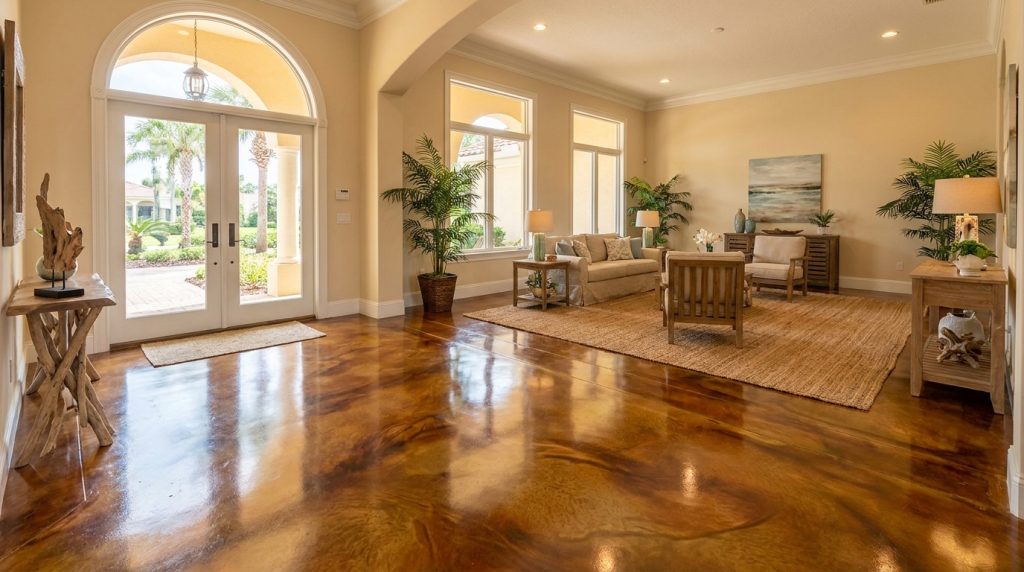
Polished concrete is a strong choice for Florida homeowners who want a durable, low-maintenance floor that eliminates grout issues and is designed to last decades. The tradeoff is hardness and gloss-level considerations that require thoughtful room selection. For homes with good existing slabs, it’s one of the most cost-effective upgrades available.
Contact DecoCrete Services for a free slab assessment or call (941) 400-1755 to find out if your concrete is a candidate for polishing.

Devin Martin is the owner and lead specialist at DecoCrete Services, serving the Sarasota and Manatee County areas. With an eye for design and a focus on structural integrity, Devin specializes in transforming plain concrete into high-end, decorative assets. He is dedicated to providing Gulf Coast homeowners with durable, weather-resistant flooring solutions that blend aesthetic appeal with industrial-grade performance.