Polyurea and polyaspartic are both high-performance garage floor coatings that are designed to last 15-25 years, but they differ in UV stability, application method, and working time. Polyaspartic is actually a subset of the polyurea family with superior UV resistance and a more forgiving application window. DecoCrete Services uses a three-part polyurea polyaspartic system across Southwest Florida and explains what separates these chemistries below.
Choosing the wrong coating chemistry for a Florida garage means watching your floor yellow, soften under hot tires, or delaminate within 2-3 years. The good news is that understanding one key distinction between polyurea and polyaspartic tells you exactly which system holds up in our UV and heat conditions.
How Polyurea and Polyaspartic Are Related (But Different)
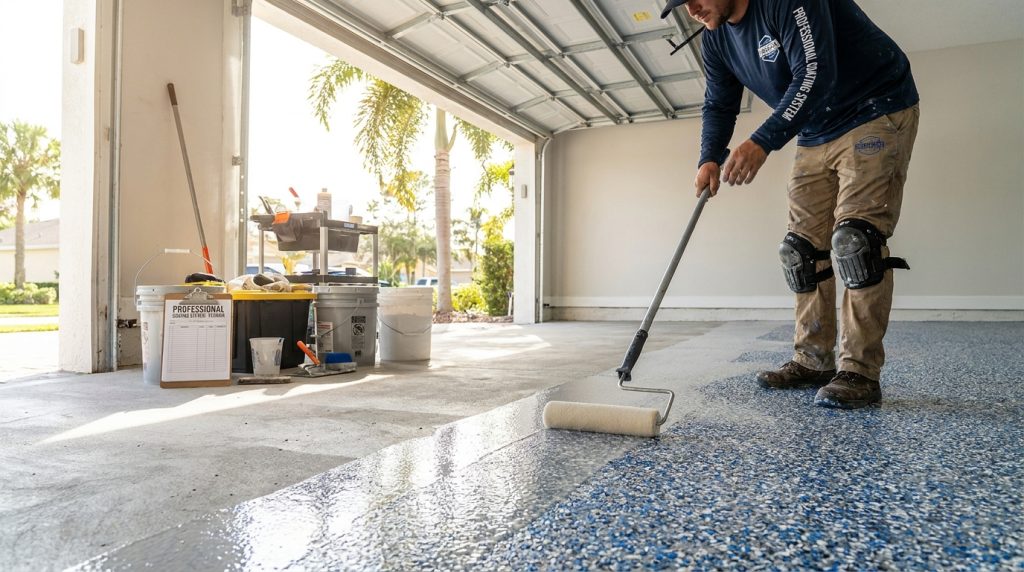
Both polyurea and polyaspartic belong to the same chemical family. Polyaspartic is a specialized type of polyurea, but the two have meaningfully different performance characteristics.
Polyurea: The Base Chemistry
Polyurea coatings cure extremely fast with a pot life of just 10-15 minutes, requiring specialized spray equipment and experienced installers who can work within that narrow window. The resulting film is significantly stronger than standard epoxy with excellent flexibility that allows it to expand and contract with concrete temperature changes without cracking.
Polyaspartic: The Evolved Formulation
Polyaspartic coatings extend the working time to 10-45 minutes, which allows for roller application instead of spray-only installation. This longer pot life produces smoother finishes and better concrete penetration for stronger adhesion. Most professional garage floor coating systems now use polyaspartic as the topcoat or full system because of this application advantage.
Performance Comparison for Florida Garages

The critical differences between these systems become most apparent in Florida’s garage environment where UV, heat, and humidity converge.
UV Stability
This is the most significant distinction for Florida applications. Polyaspartic is 100% UV-stable and won’t yellow or fade under normal sun exposure through open garage doors. Standard polyurea has moderate UV resistance and typically requires a polyaspartic topcoat to prevent yellowing in garages that receive direct sunlight.
Cure Time and Return to Service
Both systems allow return to foot traffic within hours and vehicle traffic within 24-48 hours. Compare that to traditional epoxy, which requires 3-7 days before parking on the surface. DecoCrete’s one-day garage floor installation uses this fast-cure advantage to complete projects in a single day.
Heat Resistance
Both polyurea and polyaspartic resist hot-tire pickup far better than epoxy. In Florida, where garage floor surface temperatures can exceed 140 degrees in summer, neither system is likely to soften or lift when tires park on the surface. This heat stability is why both chemistries have largely replaced epoxy for residential garage applications in warm climates.
Which System DecoCrete Uses and Why
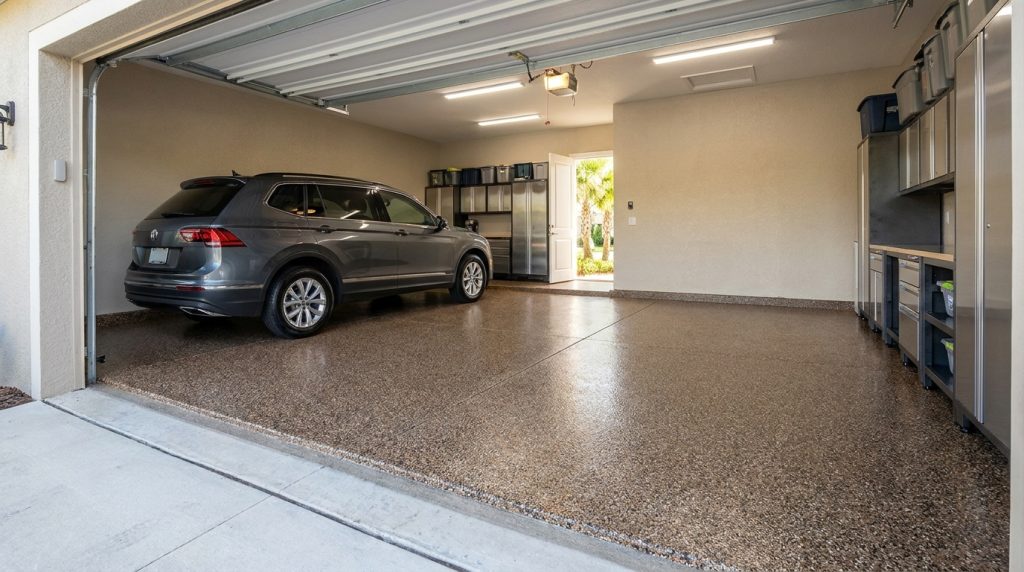
DecoCrete Services uses a three-part polyurea polyaspartic system that combines both chemistries in a layered approach optimized for Florida conditions.
- Layer 1 (Base coat): Polyurea base for maximum adhesion and flexibility
- Layer 2 (Broadcast): Decorative flake chip broadcast into wet base coat
- Layer 3 (Top coat): Polyaspartic clear coat for UV stability and stain resistance
This layered approach gives the floor polyurea’s strength and flexibility at the concrete bond line where it matters most, and polyaspartic’s UV stability and chemical resistance at the surface where sun, tires, and spills make contact. The system installs in one day and is backed by a lifetime warranty on garage floor coatings throughout Lakewood Ranch, Bradenton, and Sarasota.
Frequently Asked Questions
Is polyaspartic more expensive than polyurea?
Professional polyaspartic systems cost $5-$7 per square foot installed in the Sarasota market, similar to polyurea-only systems. The cost difference between the two chemistries is minimal compared to the performance difference in UV stability. Most professional installers have moved to polyaspartic topcoats regardless of base coat chemistry.
Can I apply polyurea or polyaspartic myself?
Polyurea requires specialized spray equipment and cures too fast for DIY application. Polyaspartic has a more forgiving window but still demands precise surface preparation, temperature management, and timing. Failed DIY coating applications are one of the most common calls DecoCrete Services receives for re-do projects.
How long does a polyurea polyaspartic system last in Florida?
Professionally installed polyurea polyaspartic systems typically last 15-25 years in Florida conditions with normal residential garage use. DecoCrete backs every garage floor installation with a lifetime warranty against peeling, hot-tire lift, and UV degradation under normal use.
Get a Coating System Built for Florida Garages
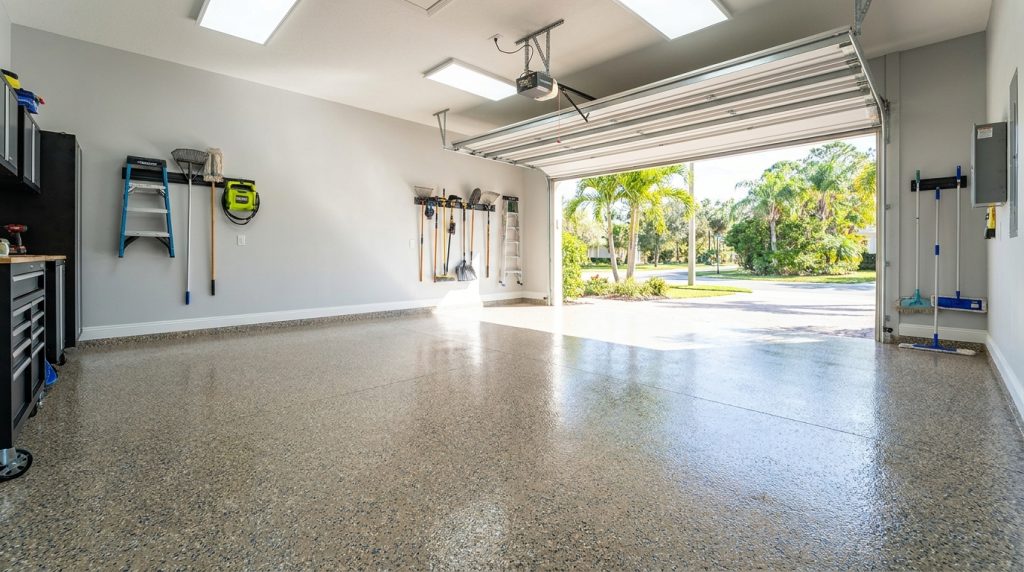
For Florida garages, the ideal system combines polyurea’s flexibility and strength with polyaspartic’s UV stability and chemical resistance. A layered approach using both chemistries delivers better long-term performance than either one alone, which is why most professional installers in warm climates have adopted this hybrid method.
Contact DecoCrete Services for a free garage floor estimate or call (941) 400-1755 to discuss coating options for your space.

Devin Martin is the owner and lead specialist at DecoCrete Services, serving the Sarasota and Manatee County areas. With an eye for design and a focus on structural integrity, Devin specializes in transforming plain concrete into high-end, decorative assets. He is dedicated to providing Gulf Coast homeowners with durable, weather-resistant flooring solutions that blend aesthetic appeal with industrial-grade performance.