
Epoxy flooring for restaurants in Florida costs $4 to $10 per square foot for standard commercial systems. Food-grade urethane cement options run $10 to $15. A properly installed system lasts 5 to 10 years in a commercial kitchen environment. DecoCrete Services installs commercial concrete coatings for restaurants and food service businesses across Sarasota and Manatee counties.
After working with restaurants, breweries, and commercial kitchens across Southwest Florida, the most common mistake we see is owners choosing a residential-grade epoxy to save money upfront. That floor fails within 18 months under grease, hot water, and daily chemical cleaning. Each section ahead answers a specific question Florida restaurant owners bring up on nearly every site walk.
Why Restaurants Need Specialized Floor Coatings
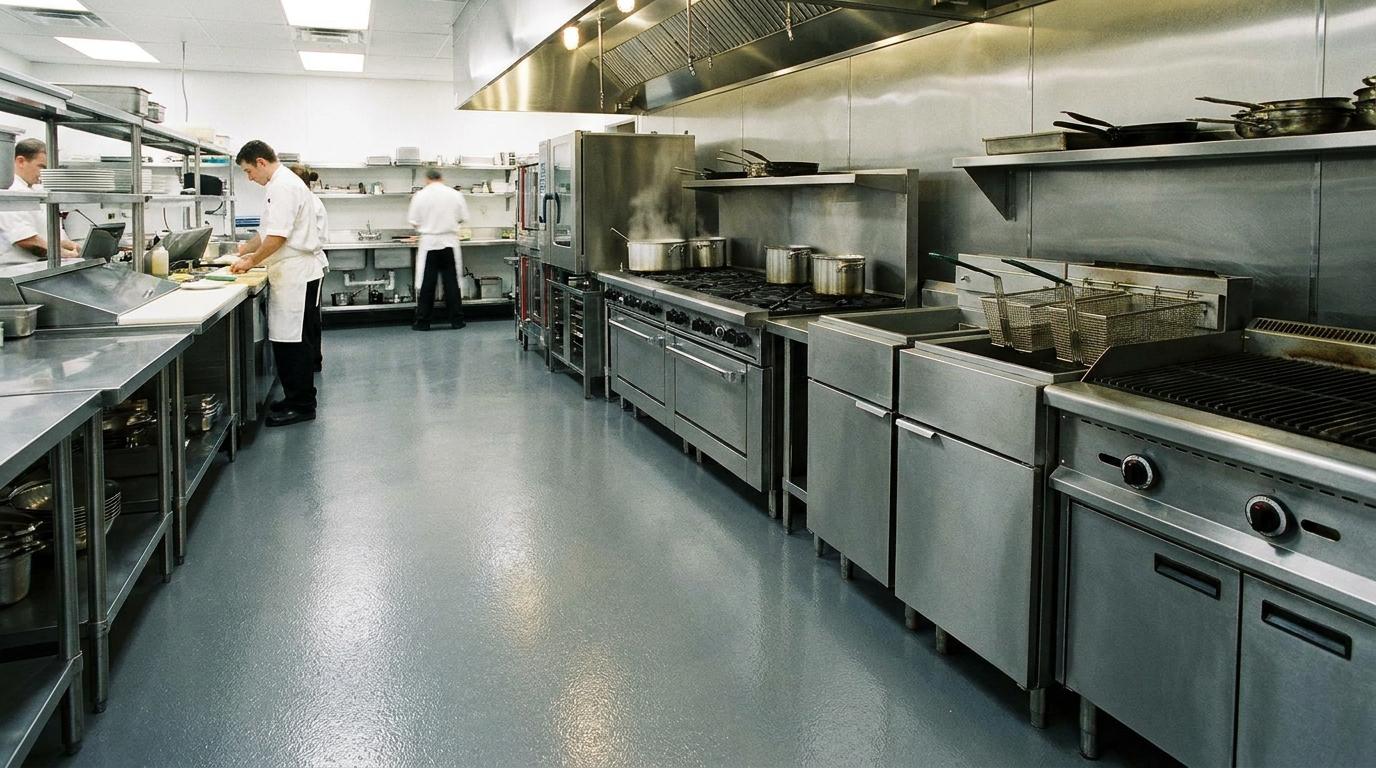
Restaurant floors face conditions that destroy standard concrete in months. Hot water from dishwashers, acidic food spills, grease, commercial cleaning chemicals, and constant foot traffic create a combination that residential coatings aren’t built to handle.
Chemical and Thermal Exposure
Commercial kitchens cycle through temperature extremes daily. Hot water from sanitizing stations hits the floor at 140°F or higher, and walk-in coolers drop temperatures near freezing within feet of cooking stations. That thermal cycling expands and contracts the coating. Standard epoxy’s thermal-shock resistance tops out around 120°F. Continuously exposing it to high-temperature sanitizing rinses will eventually soften the resin. This is why food-service-rated urethane cement is engineered for those repeated swings.
Slip Resistance Requirements
Wet kitchen floors are a liability. Commercial epoxy systems include aggregate additives like aluminum oxide or quartz broadcast that create a textured surface rated for wet environments. The dynamic coefficient of friction on a properly finished commercial kitchen floor meets the ANSI B101.3 high-risk threshold of 0.50 or higher when wet, even when it’s slick with grease and water.
Best Epoxy Systems for Restaurant Floors
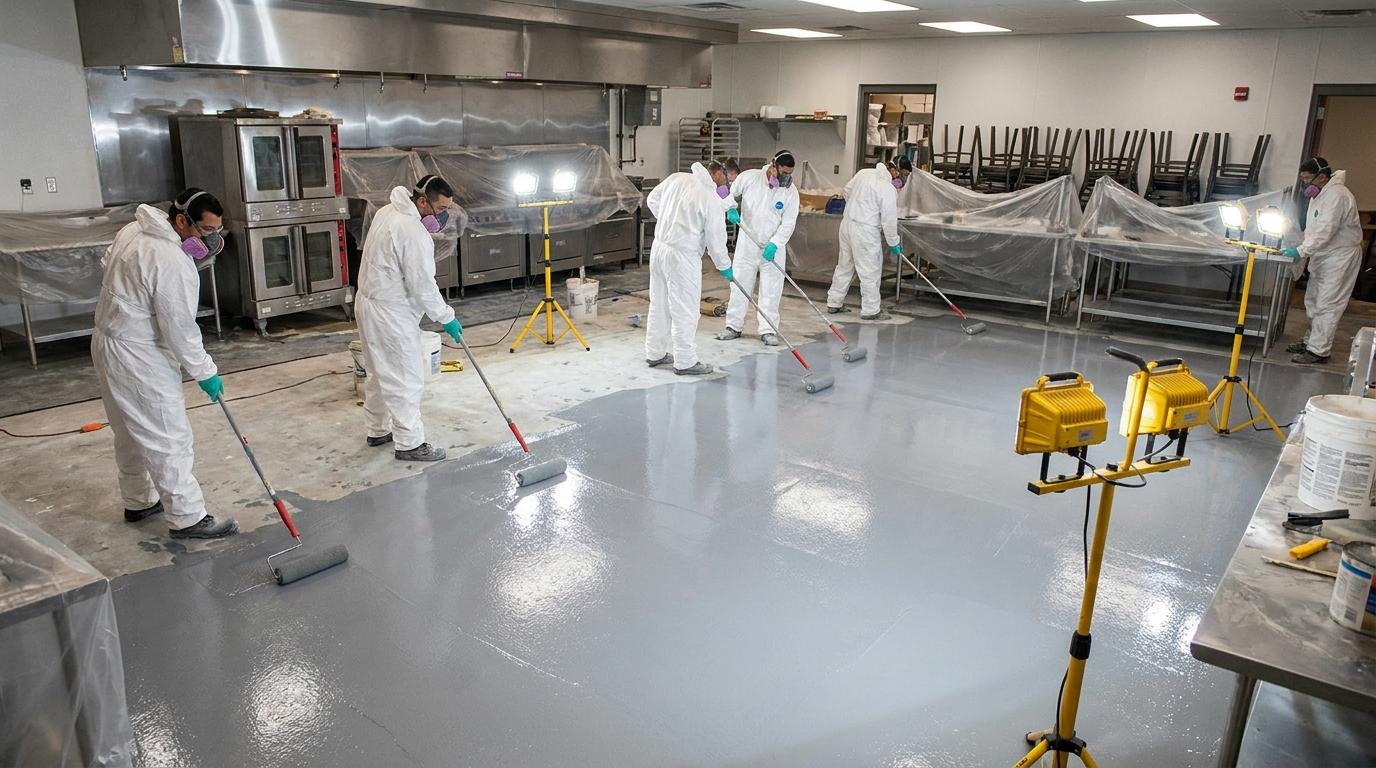
Standard Commercial Epoxy
Commercial-grade epoxy at $4 to $7 per square foot works well for dining areas, lobbies, and restrooms where exposure to extreme heat and chemicals is lower. These systems resist staining, clean easily, and offer decorative options including metallic finishes and flake systems.
For kitchens and back-of-house areas, a heavier-duty system rated for high heat and thermal shock is the better choice. It performs best over a slab poured to the right thickness for commercial use.
Urethane Cement (Specialty Kitchen System)
Urethane cement at $10 to $15 per square foot is the industry standard for the most demanding commercial kitchens: production lines with constant 180°F-plus sanitizing rinses, food processing plants, and breweries with daily chemical wash-downs. It resists thermal shock up to 250°F and bonds to concrete even when moisture vapor is present.
DecoCrete focuses on commercial epoxy and polyaspartic systems, which handle daily restaurant wear and chemical exposure cleanly at a lower price point. Restaurants running extreme-condition kitchens should consult a specialty food-service flooring contractor for urethane cement installation.
Polyaspartic for Front-of-House
Polyaspartic coatings at $6 to $10 per square foot work best in dining rooms, bars, and entryways. They cure in hours instead of days, which means less downtime during installation. UV stability keeps the color consistent in dining areas with natural light, and the seamless surface makes daily cleaning faster than tile with grout lines. The same epoxy flooring chemistry used in Sarasota homes adapts to front-of-house applications by adding aggregate for slip resistance and UV-stable topcoats for sun-facing windows.
Florida Health Code and Flooring Requirements

Florida’s Department of Business and Professional Regulation (DBPR) oversees restaurant inspections under Chapter 61C of the Florida Administrative Code. Flooring requirements focus on three areas: the surface must be smooth enough to clean effectively, non-absorbent so bacteria can’t harbor in the material, and durable enough to resist daily sanitization.
Epoxy and urethane cement floors meet all three requirements when properly installed. The seamless surface eliminates grout lines where bacteria collect, and the non-porous finish prevents moisture absorption. Uncoated concrete fails health inspections because its porous surface absorbs grease and moisture, creating conditions that standard cleaning can’t address.
Frequently Asked Questions
How long does epoxy flooring last in a restaurant kitchen?
Epoxy flooring in a restaurant kitchen typically lasts 5 to 10 years before it needs recoating, depending on the system and maintenance schedule. Food-grade urethane cement systems push toward the upper end of that range because they resist thermal shock and chemical exposure better than standard epoxy. Residential-grade systems installed in commercial kitchens often fail within 1 to 2 years.
Can you install epoxy flooring in a restaurant without closing?
You can install epoxy flooring in a restaurant with minimal downtime by scheduling the work in sections. Polyaspartic systems can receive foot traffic within 4 hours and be ready for full service the next day, allowing overnight installations or a single-day closure. Standard epoxy requires 24 to 72 hours of cure time per section, so a phased approach keeps part of the restaurant operational during installation.
Is epoxy flooring cheaper than tile for a restaurant?
Epoxy flooring is typically cheaper than commercial tile for restaurant installation, running $4 to $10 per square foot compared to $8 to $20 for commercial quarry tile with installation. Epoxy also eliminates ongoing grout maintenance costs that tile requires. The cost advantage holds on kitchens of any size, but commercial and industrial coating systems in Sarasota deliver the strongest return on spaces above 500 square feet where the per-square-foot rate drops with scale.
Protect Your Restaurant Investment from Day One
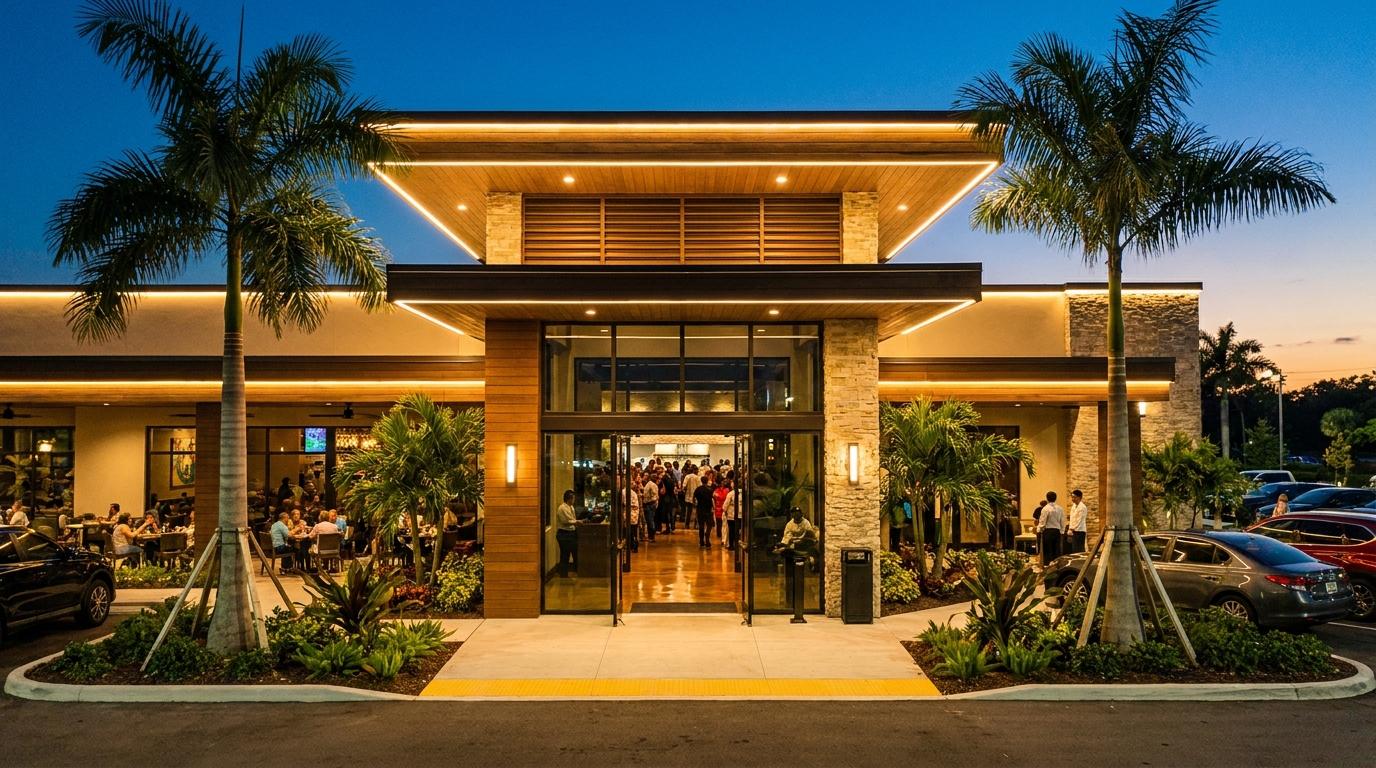
The right floor coating saves money by eliminating the cycle of patching, replacing, and dealing with health code issues from worn flooring. Commercial-grade epoxy handles the kitchen, prep areas, and back-of-house. Polyaspartic or decorative epoxy handles the dining room. For high-heat production kitchens with sustained sanitizing-temperature exposure, urethane cement from a specialty contractor is the right spec. Choosing the right system for each area is the decision that determines whether the floor lasts 2 years or 10.
For a free estimate on commercial epoxy flooring in Sarasota or Manatee County, contact DecoCrete Services at (941) 400-1755.

Devin Martin is the owner and lead specialist at DecoCrete Services, serving the Sarasota and Manatee County areas. With an eye for design and a focus on structural integrity, Devin specializes in transforming plain concrete into high-end, decorative assets. He is dedicated to providing Gulf Coast homeowners with durable, weather-resistant flooring solutions that blend aesthetic appeal with industrial-grade performance.